

The ANIMALS
Every Brand Behaves Like an Animal
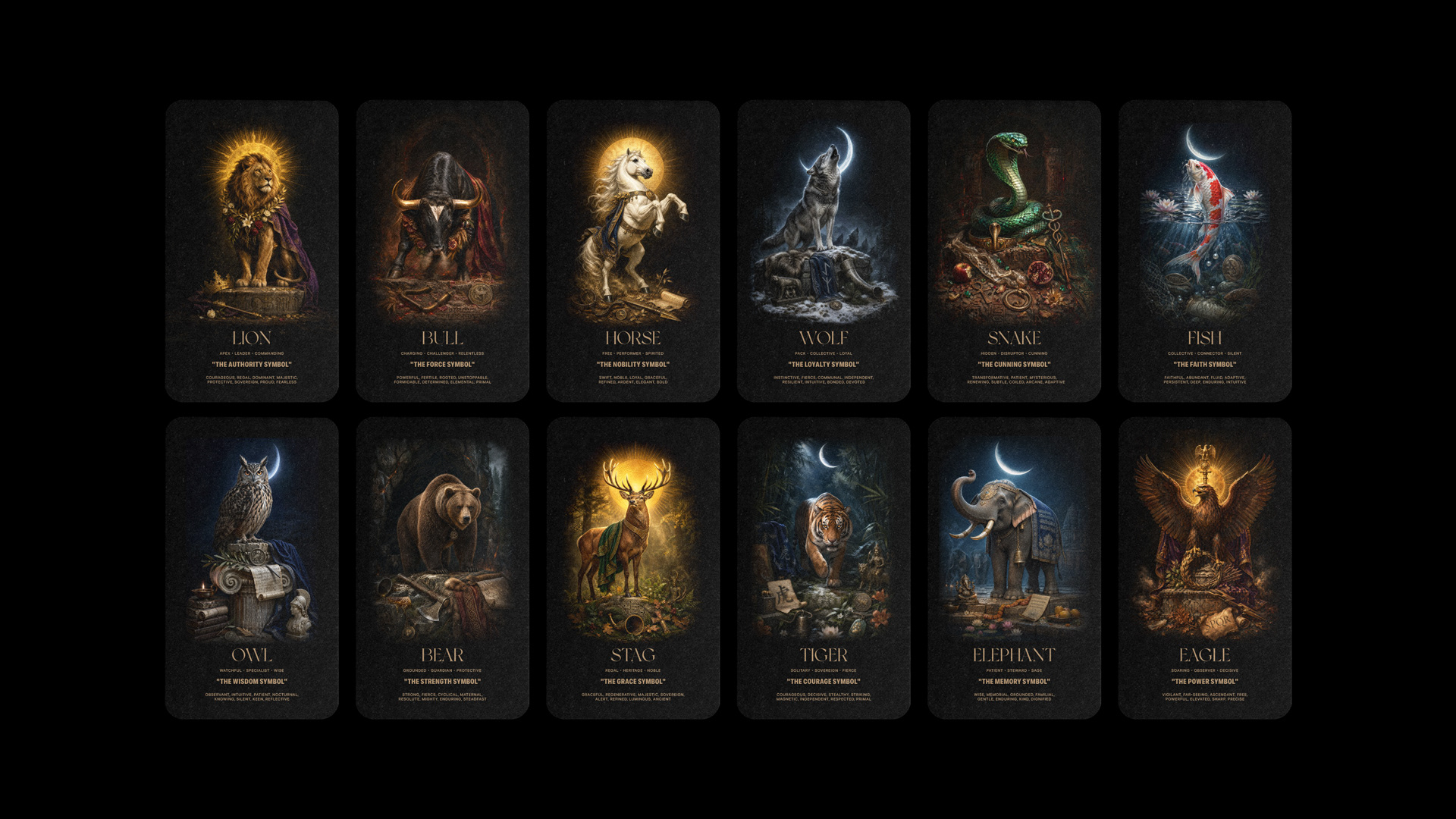
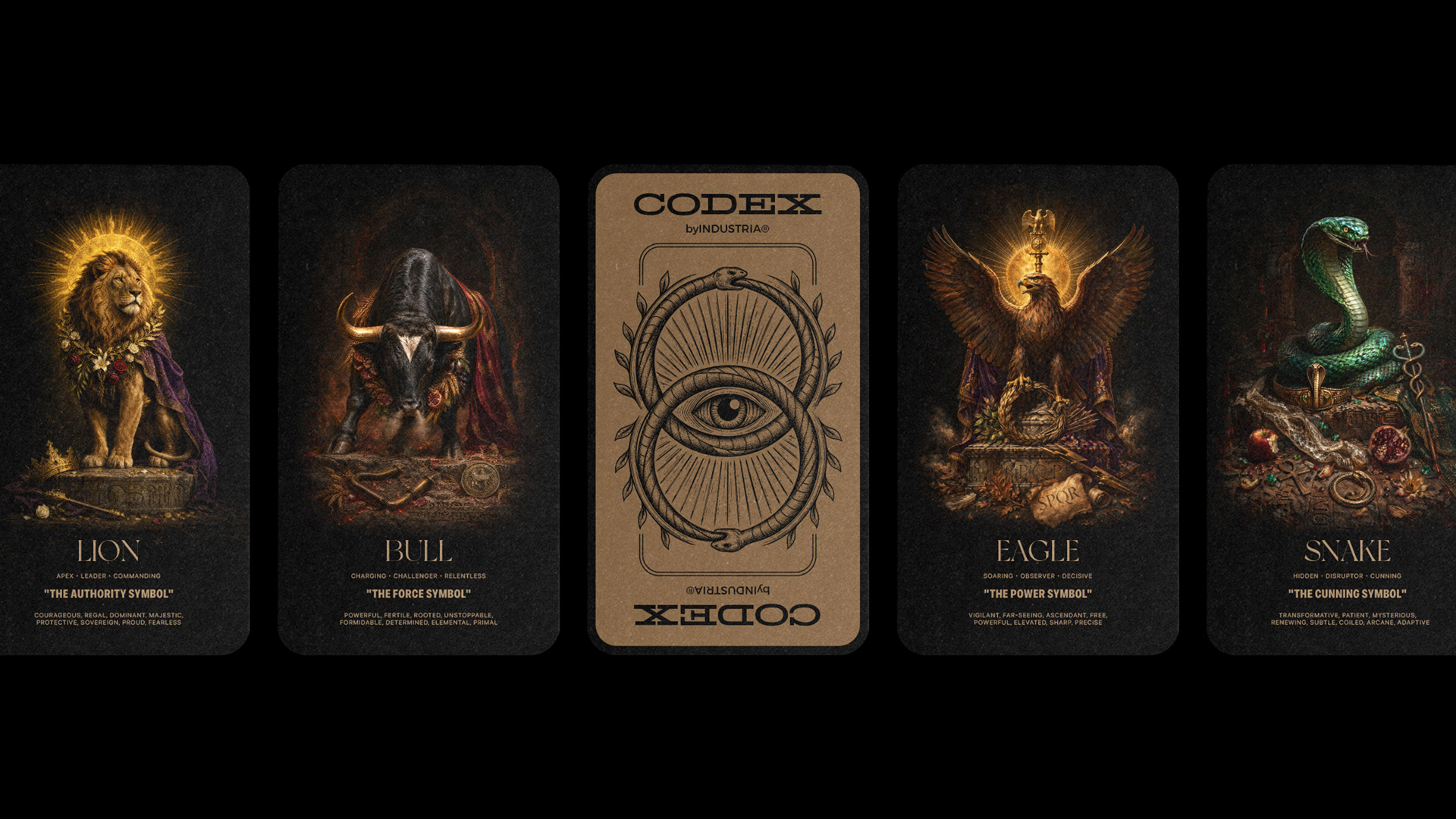
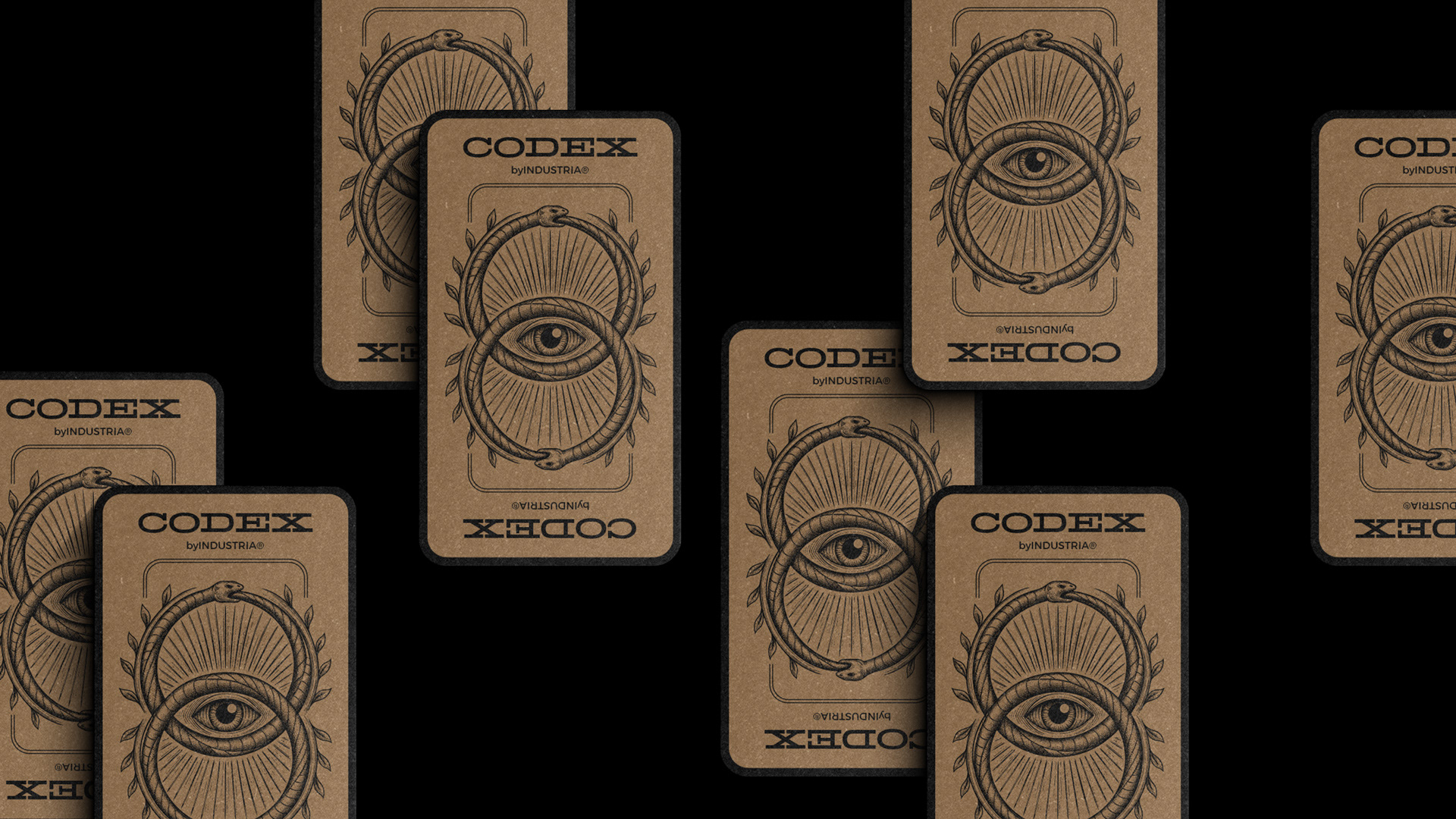
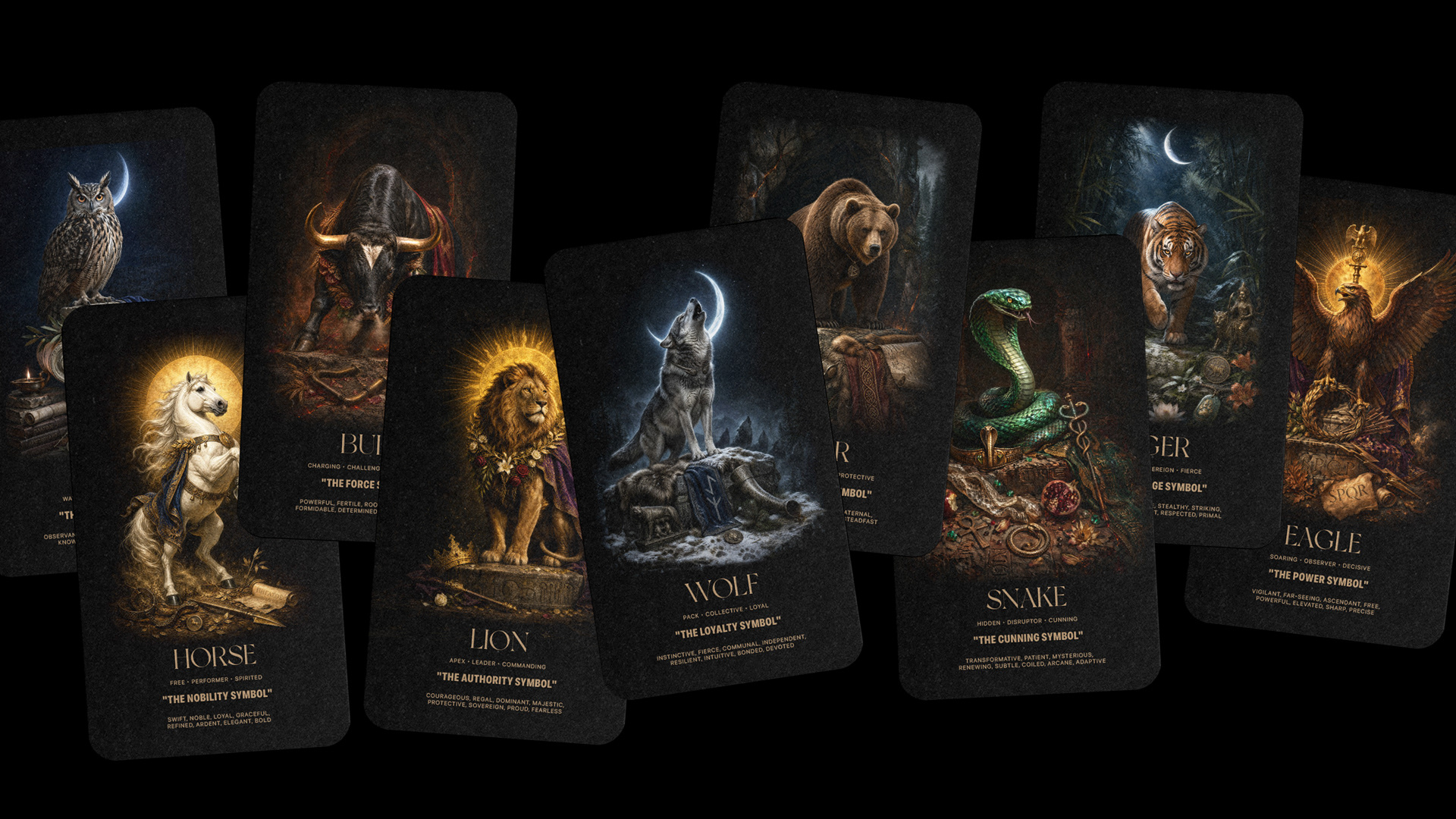
CODEX™ Vol. V — THE ANIMALS is an editorial study of how twelve creatures built the most enduring brands in the world.
Most branding conversations begin with a logo. They should begin with an animal.
Long before there were brands, there were animals. Every culture that has tried to describe power, wisdom, force, or loyalty has reached for the same creatures. The Egyptian pharaohs crowned themselves with the cobra. The Roman legions marched under the eagle. The Norse swore by the wolf. The samurai carried the tiger. The alchemists studied the serpent. This vocabulary predates writing itself, which is why the brands that have endured the longest tend to share one trait. They chose an animal, and let the animal do the work.
That inheritance is not accidental. Peugeot has been the Lion since 1858. Ferrari became the Prancing Horse in 1932. Wall Street chose the Bull, and it has stood in front of the New York Stock Exchange since 1989. Rome kept the Eagle for a thousand years, and every empire since has borrowed it. Every serious brand mark in the last century has, at some point, been drawn against an animal.
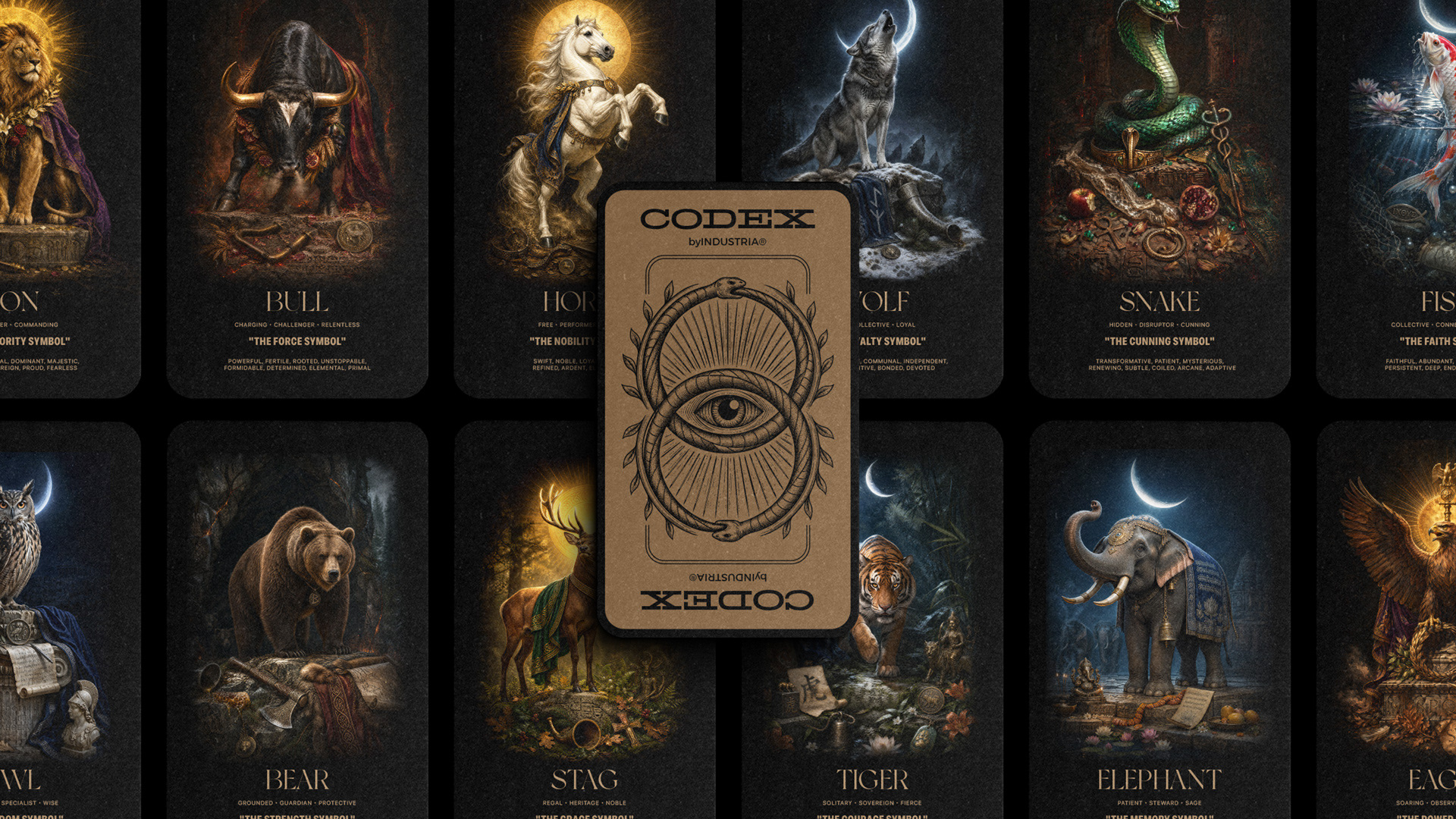
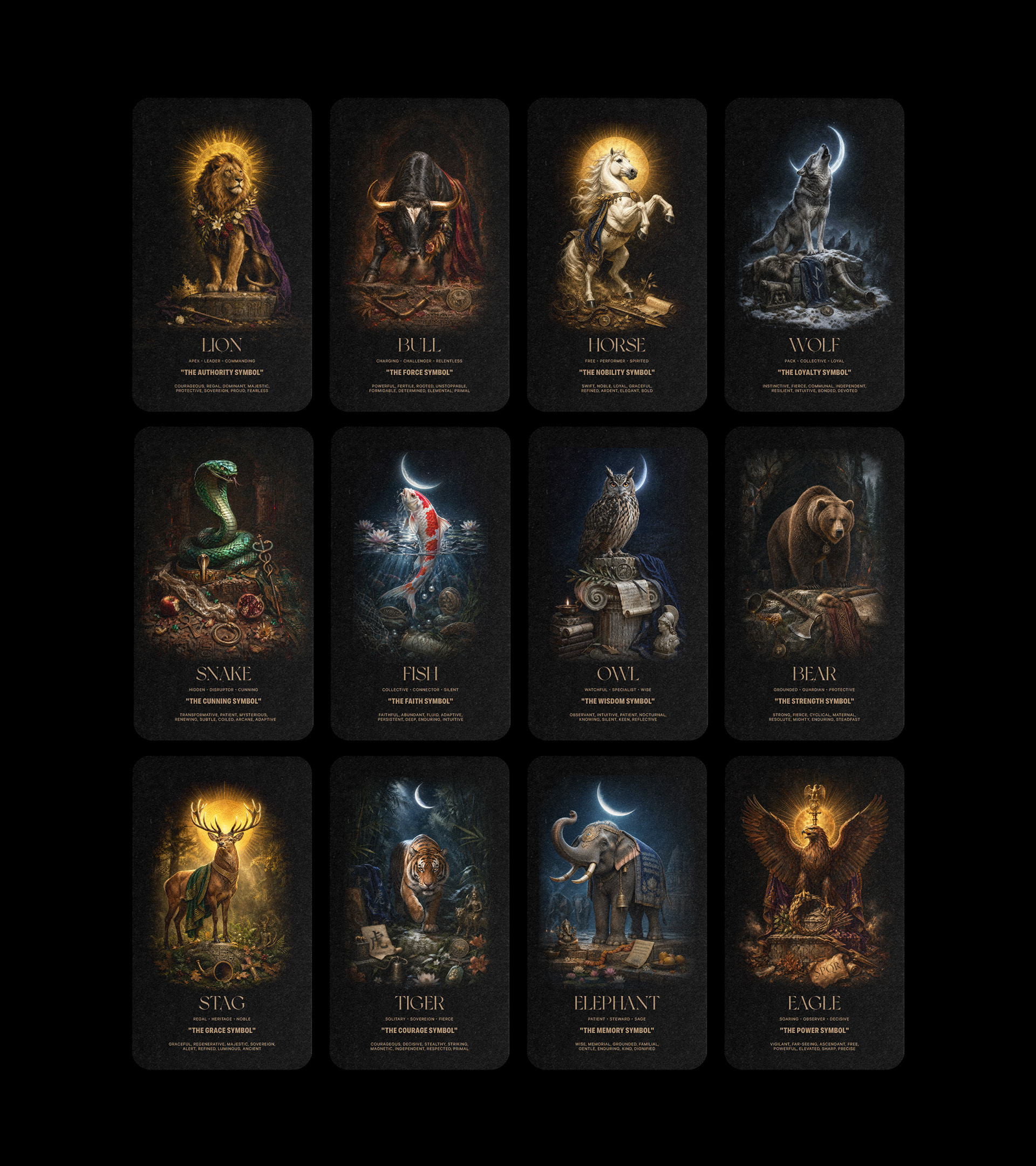
CODEX™ Vol. V — THE ANIMALS is a study of that inheritance. Twelve cards, twelve creatures, twelve postures every brand is already performing whether it knows it or not. This is what each one means, who has claimed it, and why.
LION
The Authority Symbol
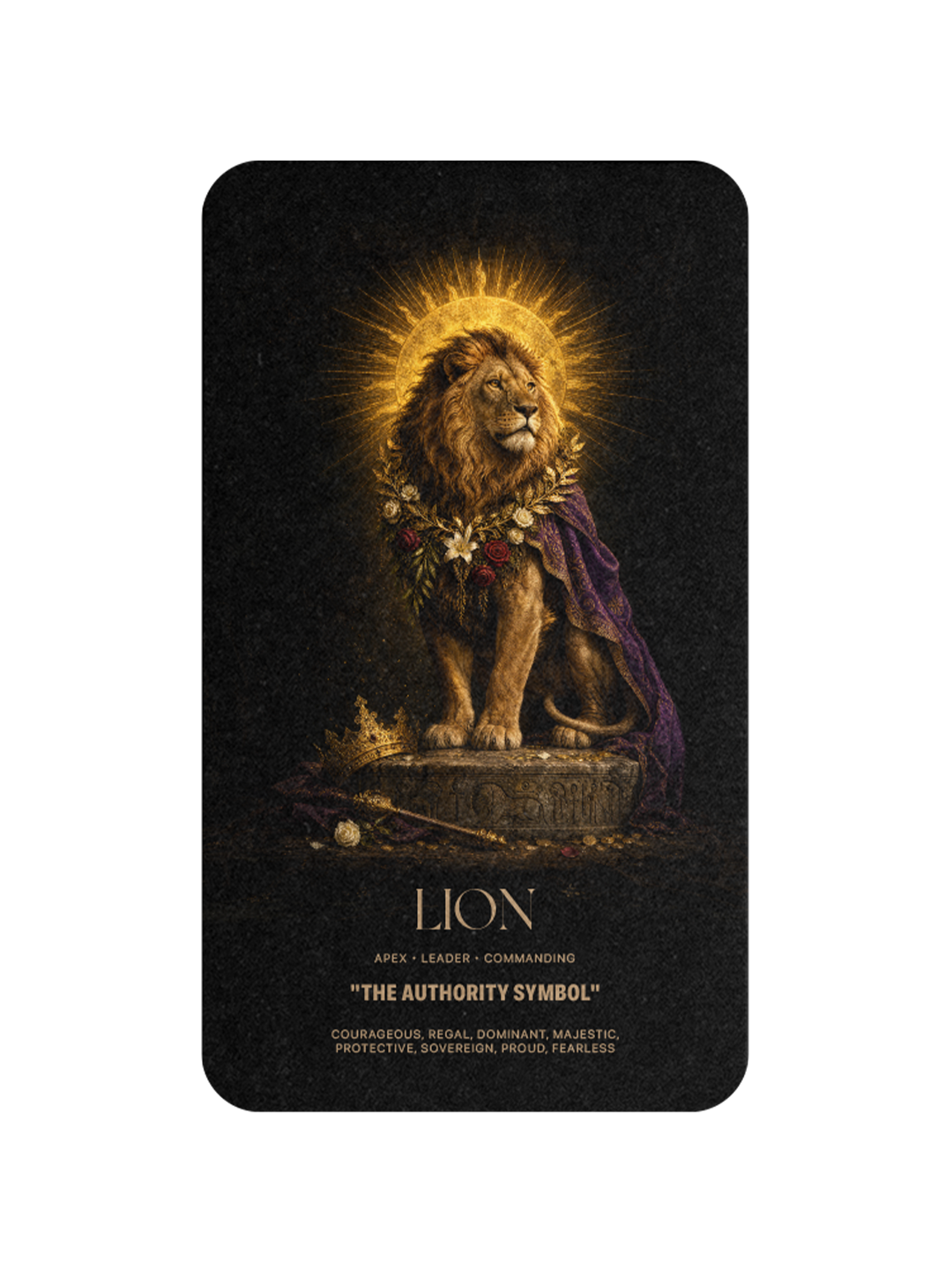
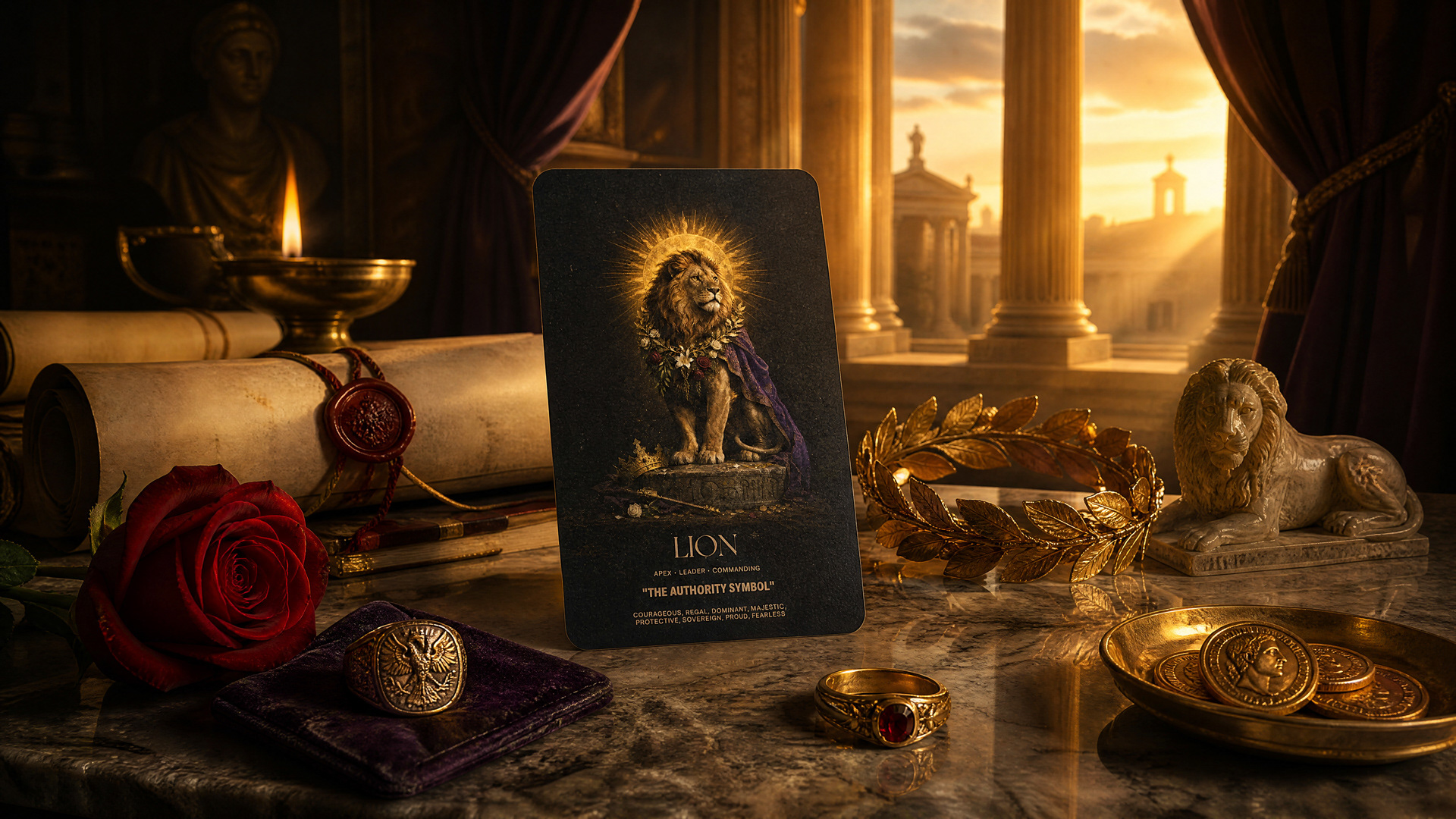
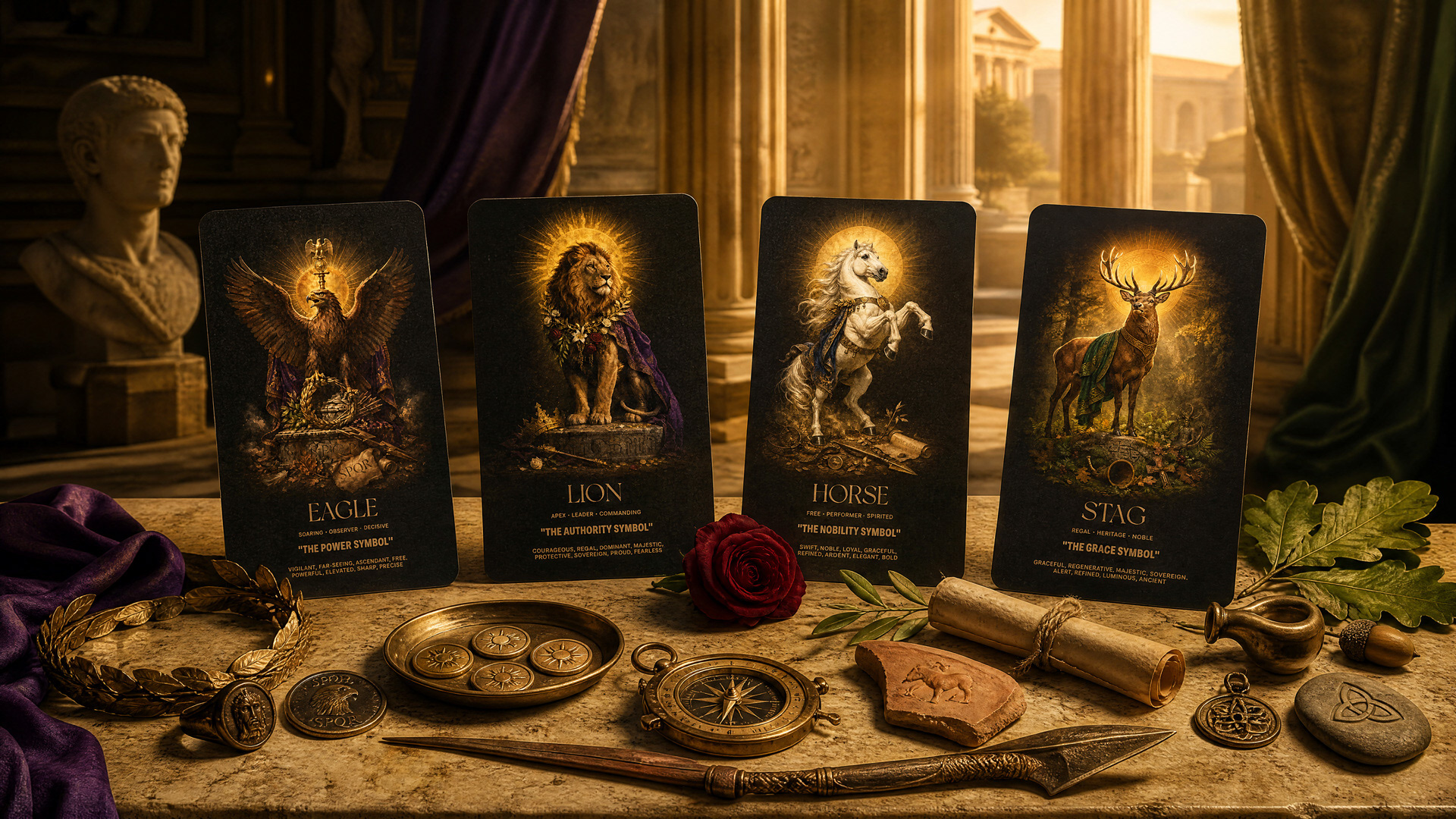
The lion is the animal every civilization has crowned. Egyptian, Persian, Assyrian, Greek, Roman, Norman, British: every empire that has built a coat of arms has put a lion on it. Peugeot has carried the lion since 1858, when the Peugeot family adopted the animal as a mark for its steelworks in eastern France. MGM introduced Leo the Lion in 1924, and his roar has opened more films than any single sound in cinema. ING chose the Dutch heraldic lion in orange for a global financial identity. The lion does not describe leadership. It announces it.
EAGLE
The Power Symbol
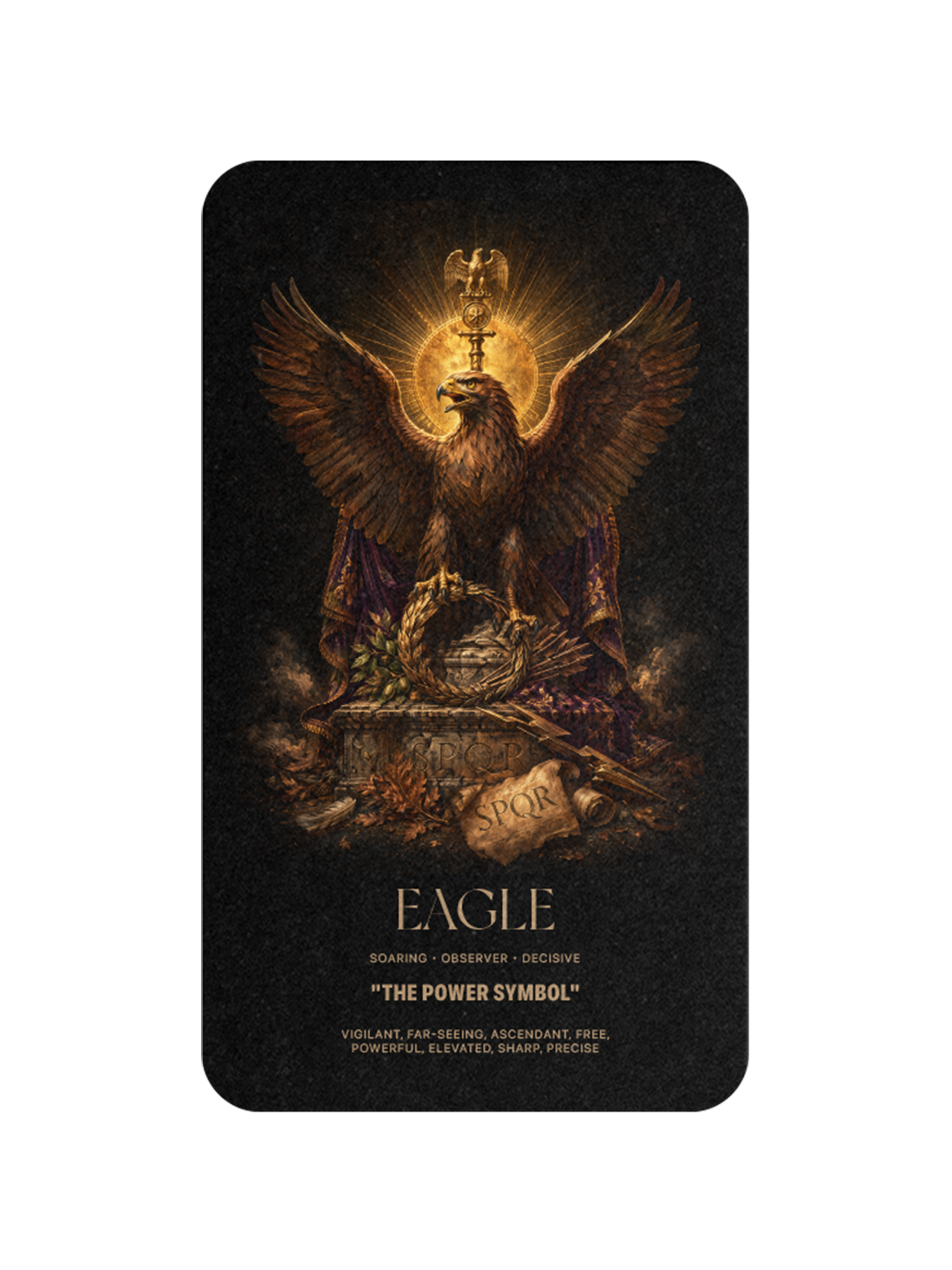
The eagle has been the imperial mark of the West for two thousand years. Rome carried it on the aquila standard of every legion after the Marian reforms of 104 BCE. Charlemagne inherited it. The Habsburgs painted it double-headed. The United States adopted it on the Great Seal in 1782. Anheuser-Busch, one of the oldest surviving eagle marks in commerce, registered its A-and-eagle logo in 1872. American Airlines carried the eagle into the sky. The eagle does not signal power. It commands it from above.
BULL
The Force Symbol
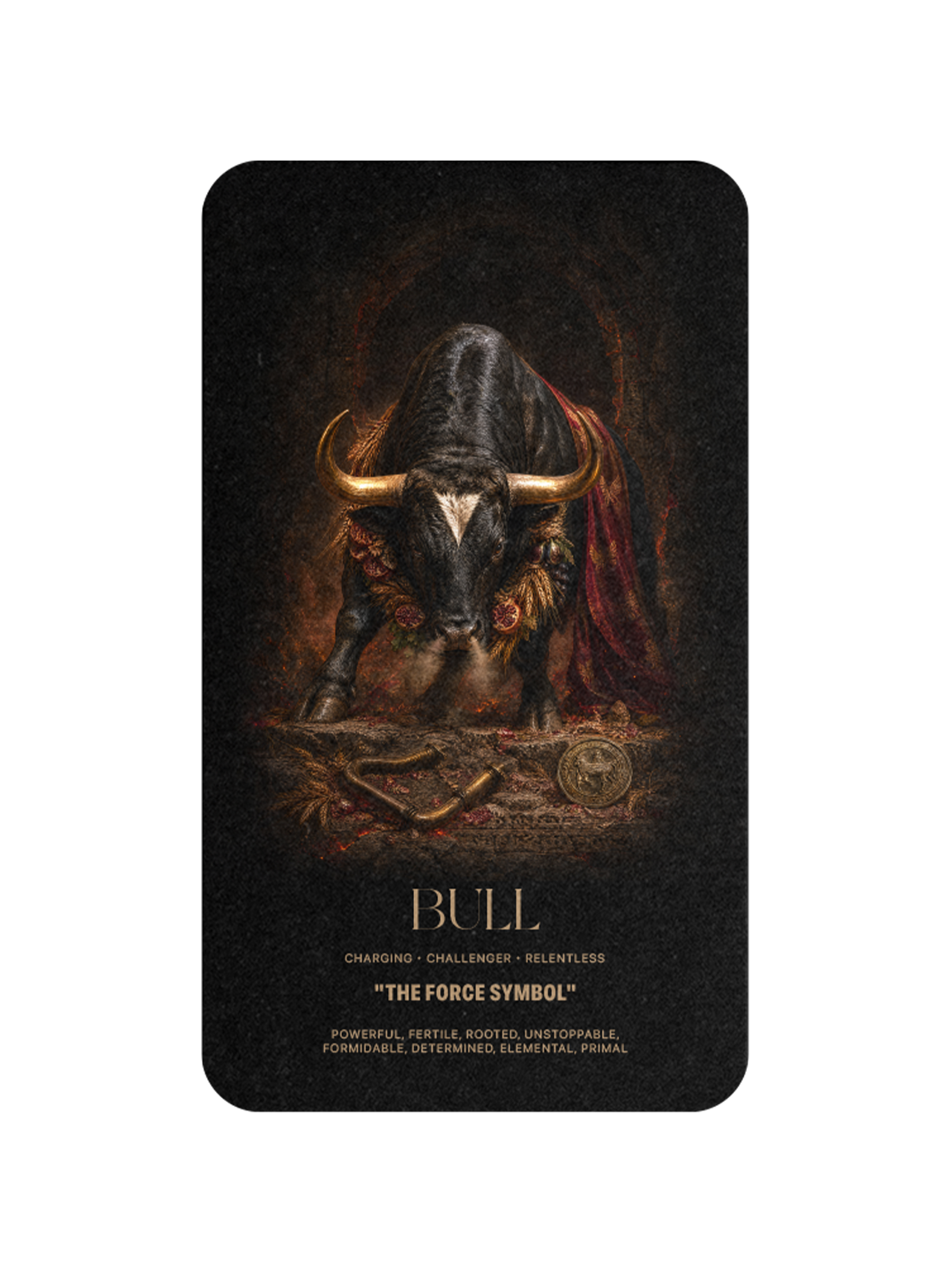
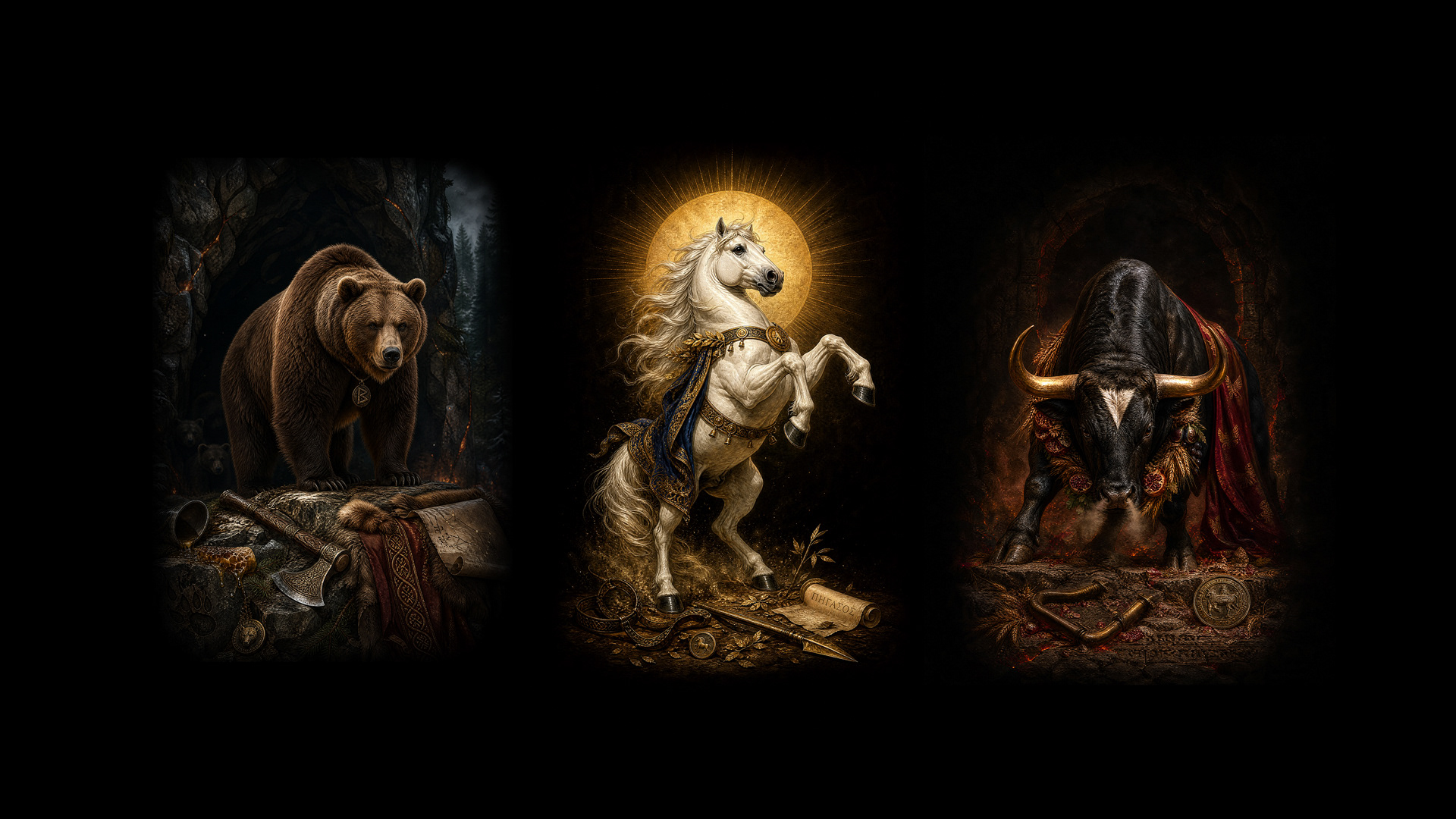
The bull has been the animal of the market since it was carved on the walls of Knossos. It was worshipped in Egypt as Apis. It was ridden on frescoes by Minoan bull-leapers. Merrill Lynch adopted its bull in 1974 to signal upward markets. Red Bull was founded in 1987 and turned the animal into an entire energy category. Arturo Di Modica's Charging Bull was installed in front of the New York Stock Exchange in December 1989 and has never been moved. The bull does not represent force. It performs it.
HORSE
The Nobility Symbol
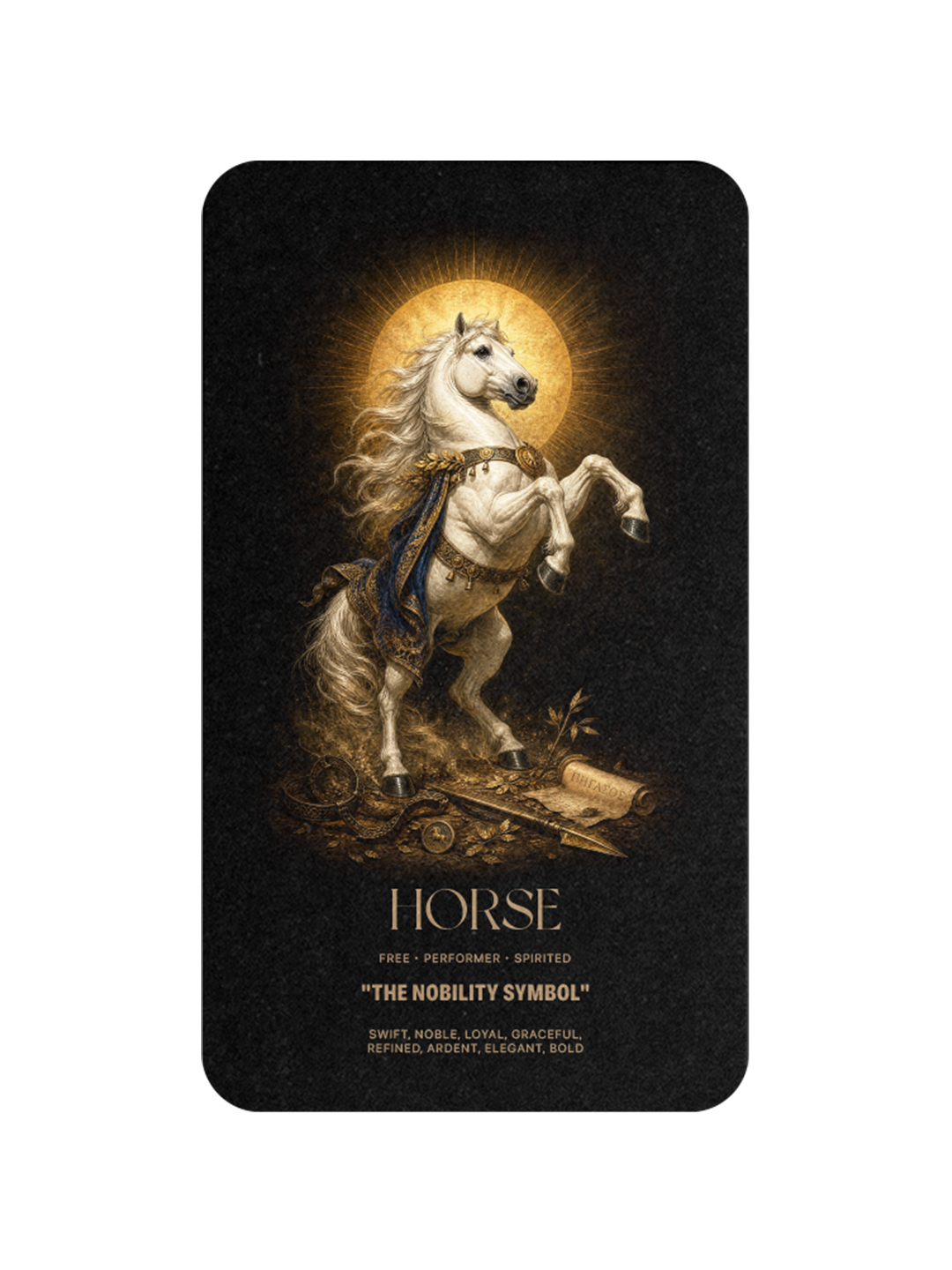
The horse is the animal of aristocracy. Every noble house in Europe, from the Bourbons to the Habsburgs, marked itself with a horse. Ferrari's Prancing Horse, the Cavallino Rampante, has adorned every Scuderia car since 1932, inherited from the fuselage of Italian ace pilot Francesco Baracca. Porsche placed the same horse inside a crest in 1952, tracing it back to Stuttgart's medieval coat of arms. Hermès built its entire brand around the horse, keeping the saddler's mark long after leaving the saddle trade. The horse does not decorate a brand. It ennobles it.
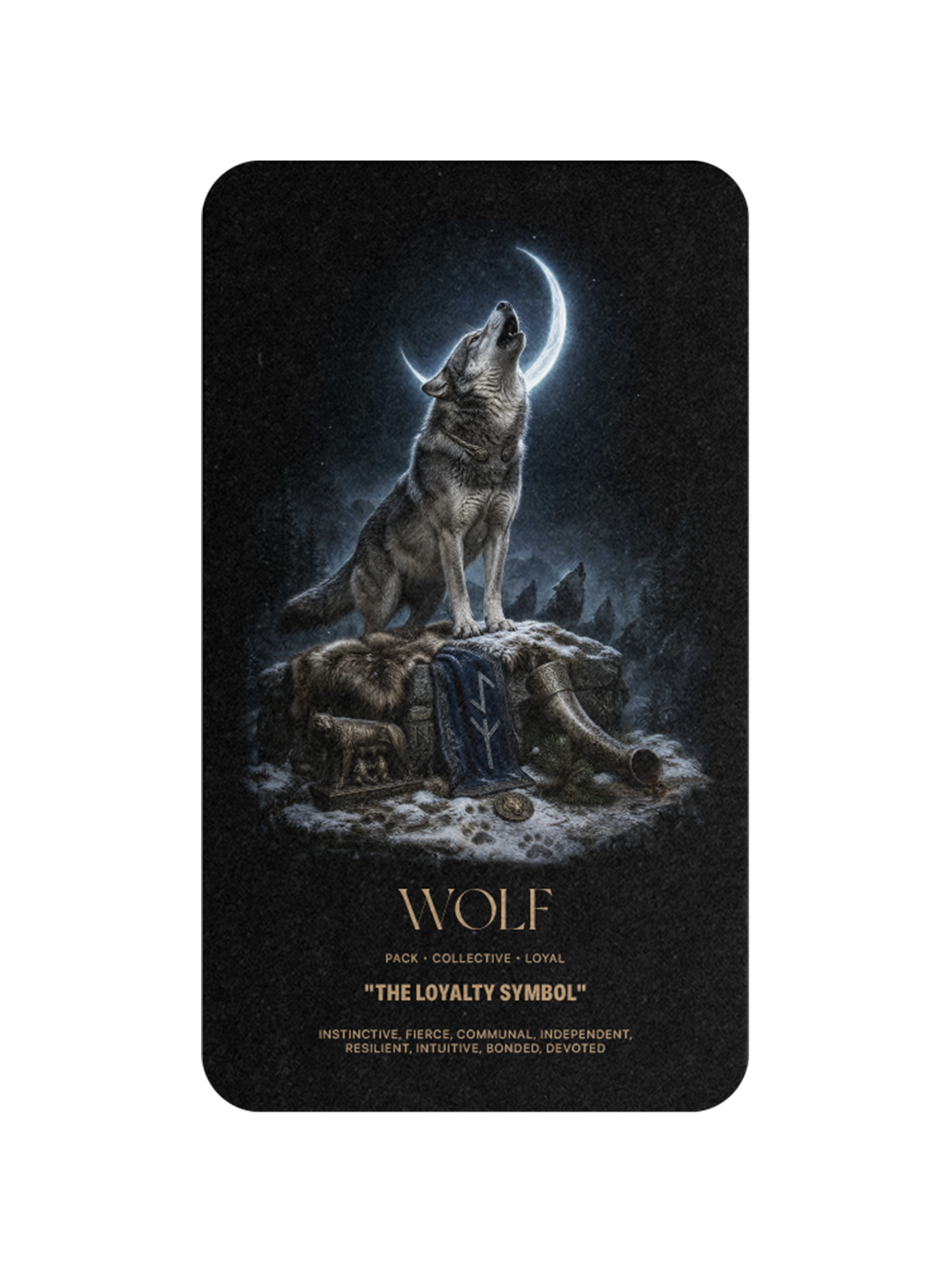
The Loyalty Symbol
The wolf has been the animal of the pack since Rome was founded by twins raised by one. The Norse swore by it. Every warrior culture that has ever assembled itself into a fighting unit has borrowed its logic. Wolf's Head Motor Oil, one of America's oldest surviving lubricant brands, marks its territory with a running wolf. Volkswagen's ancestral home is Wolfsburg, "the wolf's castle," and the city's coat of arms carries the animal. Every sports team from the Minnesota Timberwolves to the Wolves of London to VfL Wolfsburg draws from the same instinct. The wolf does not stand for the individual. It stands for the pack that will not leave one behind.
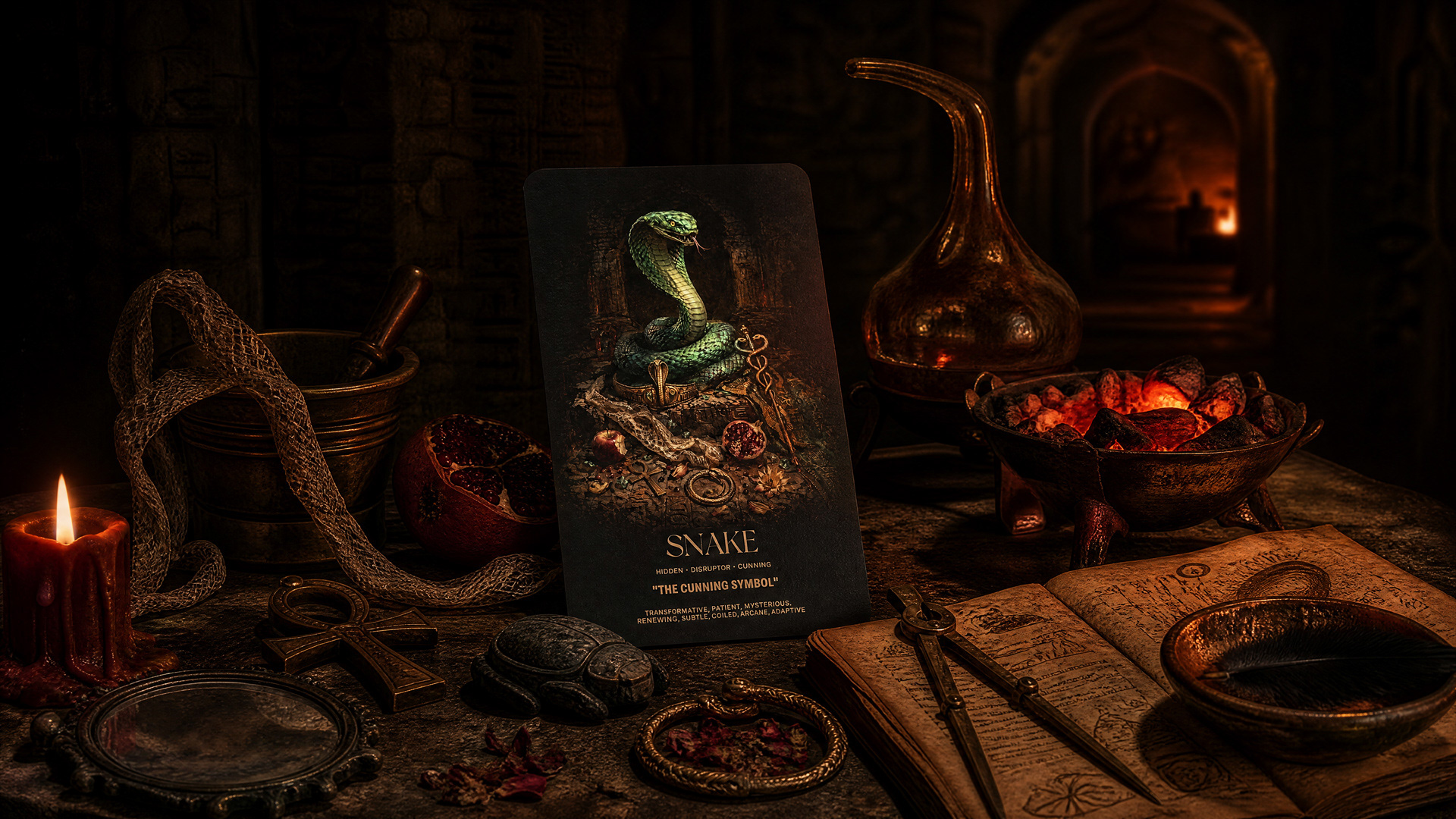
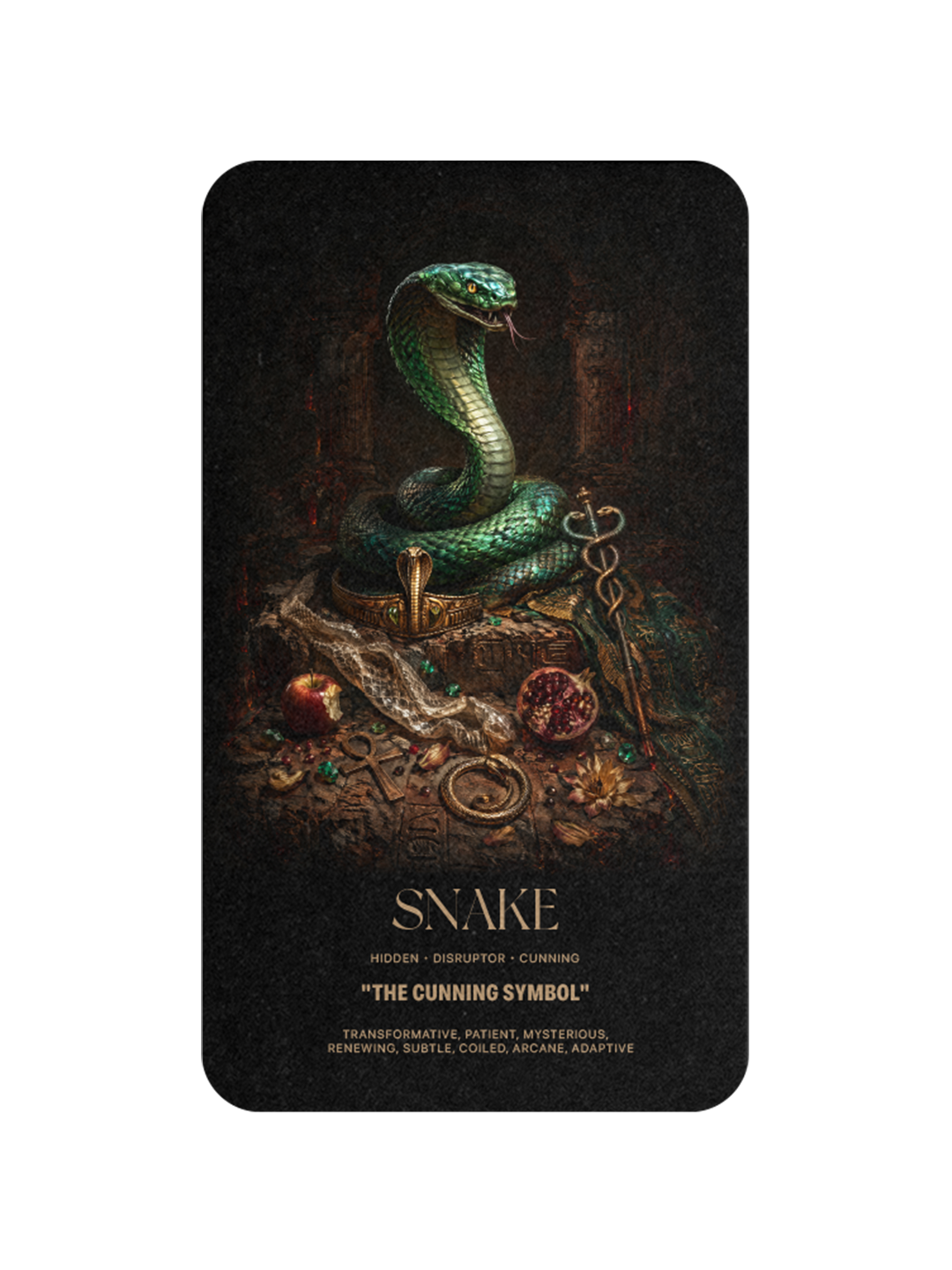
SNAKE
The Cunning Symbol
The snake is the animal of transformation. It sheds its skin and becomes new. It was worn by the Egyptian pharaohs as the Uraeus. It coiled around the caduceus of Hermes. It guarded every threshold in ancient Greece. Alfa Romeo has carried the Biscione, the Milanese serpent, since 1910, adopted from the coat of arms of the Visconti family. Gucci used the snake motif from Guccio Gucci's earliest collections and Alessandro Michele returned it to the centre of the brand in 2015. The snake does not warn you. It waits for you.
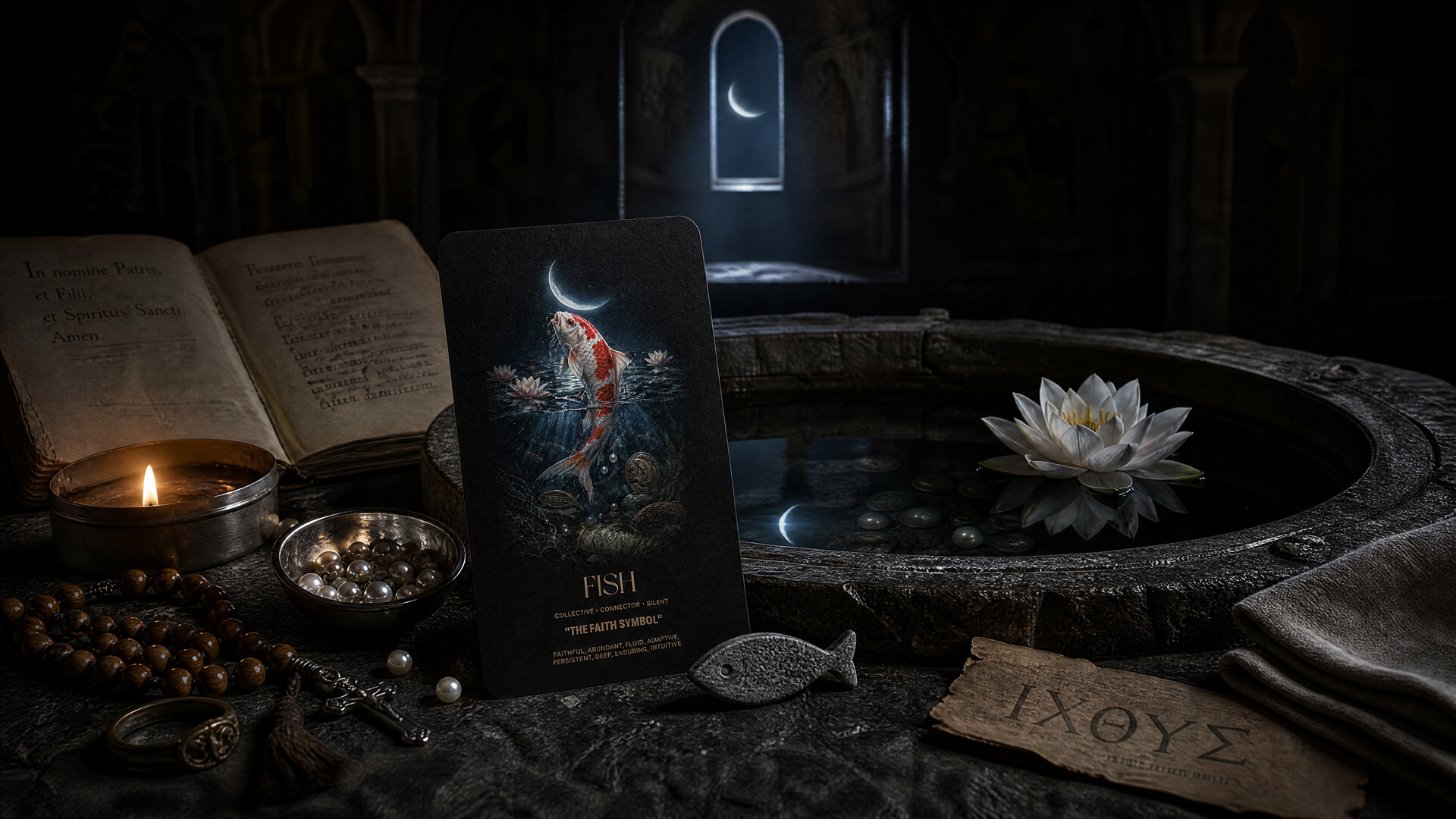
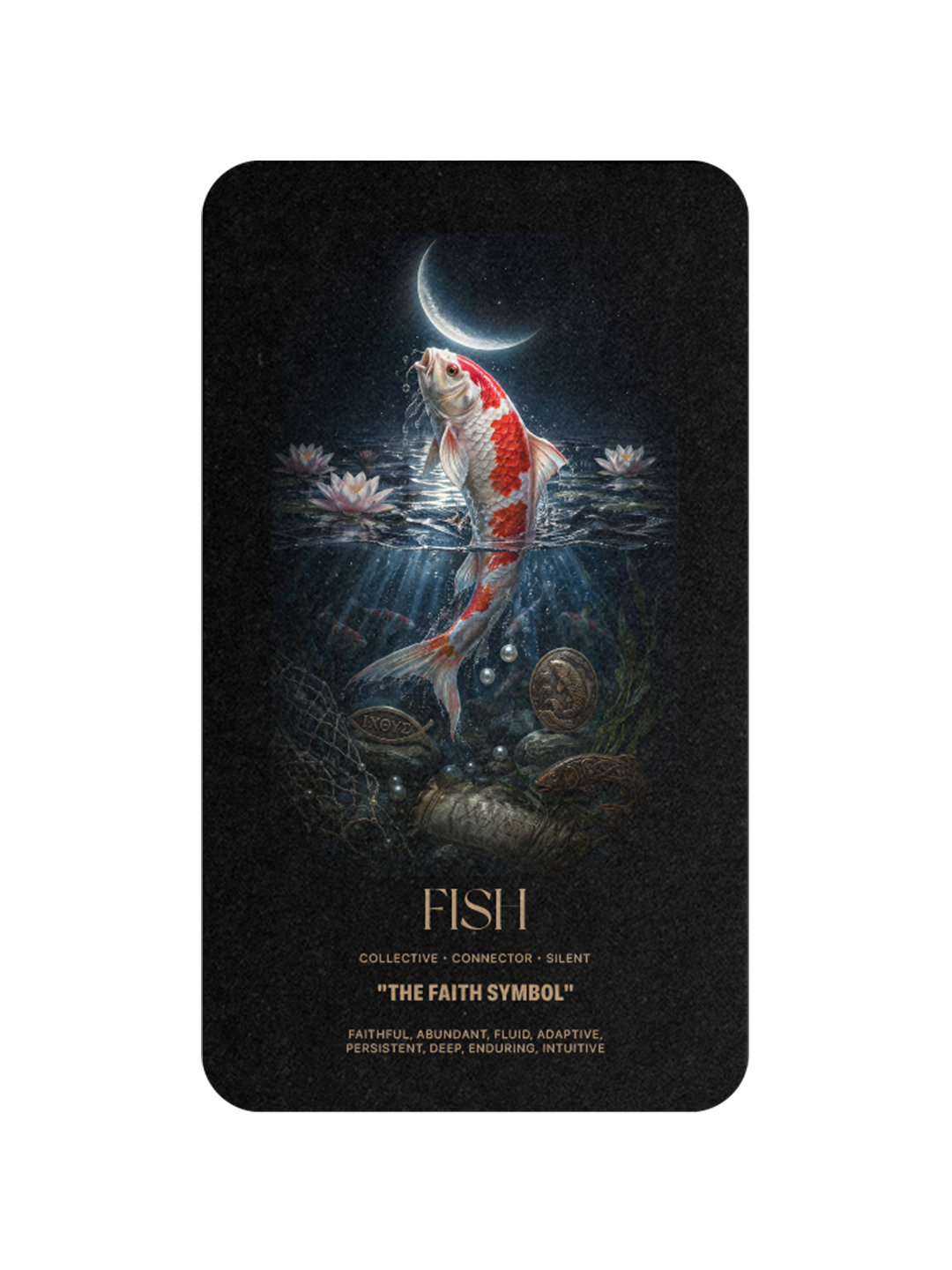
FISH
The Faith Symbol
The fish is the oldest secret symbol of belief. The Ichthys, drawn in a single stroke, was used by early Christians in the second century to identify one another under persecution. In China, the carp that climbs the falls of the Yellow River becomes a dragon. In Japan, the koi swims upstream against every current, and every temple pond has been a meditation on persistence. Bumble Bee Foods has carried its tuna since 1899, one of the earliest surviving fish marks in commerce. The fish does not speak. It gathers.
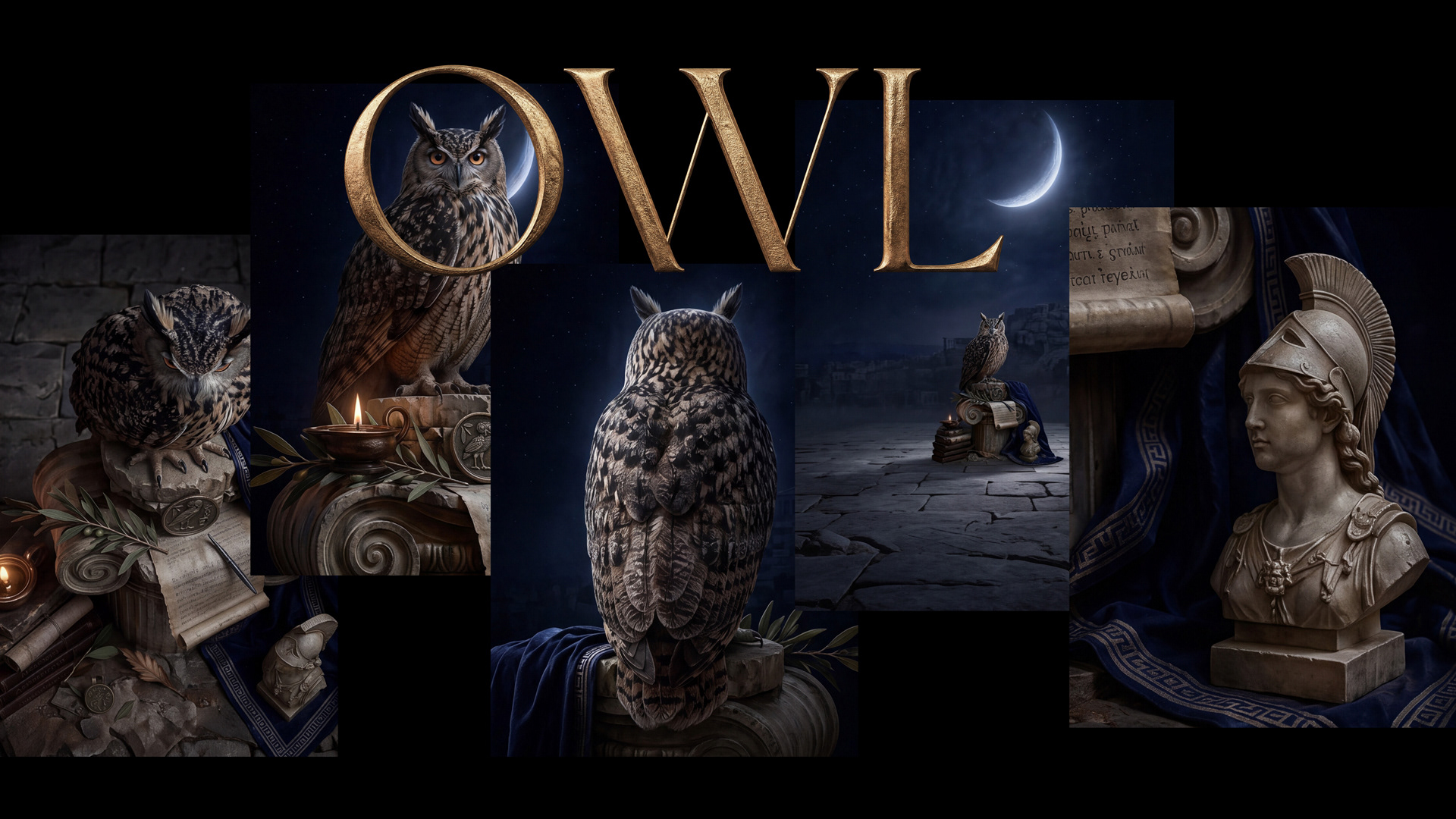
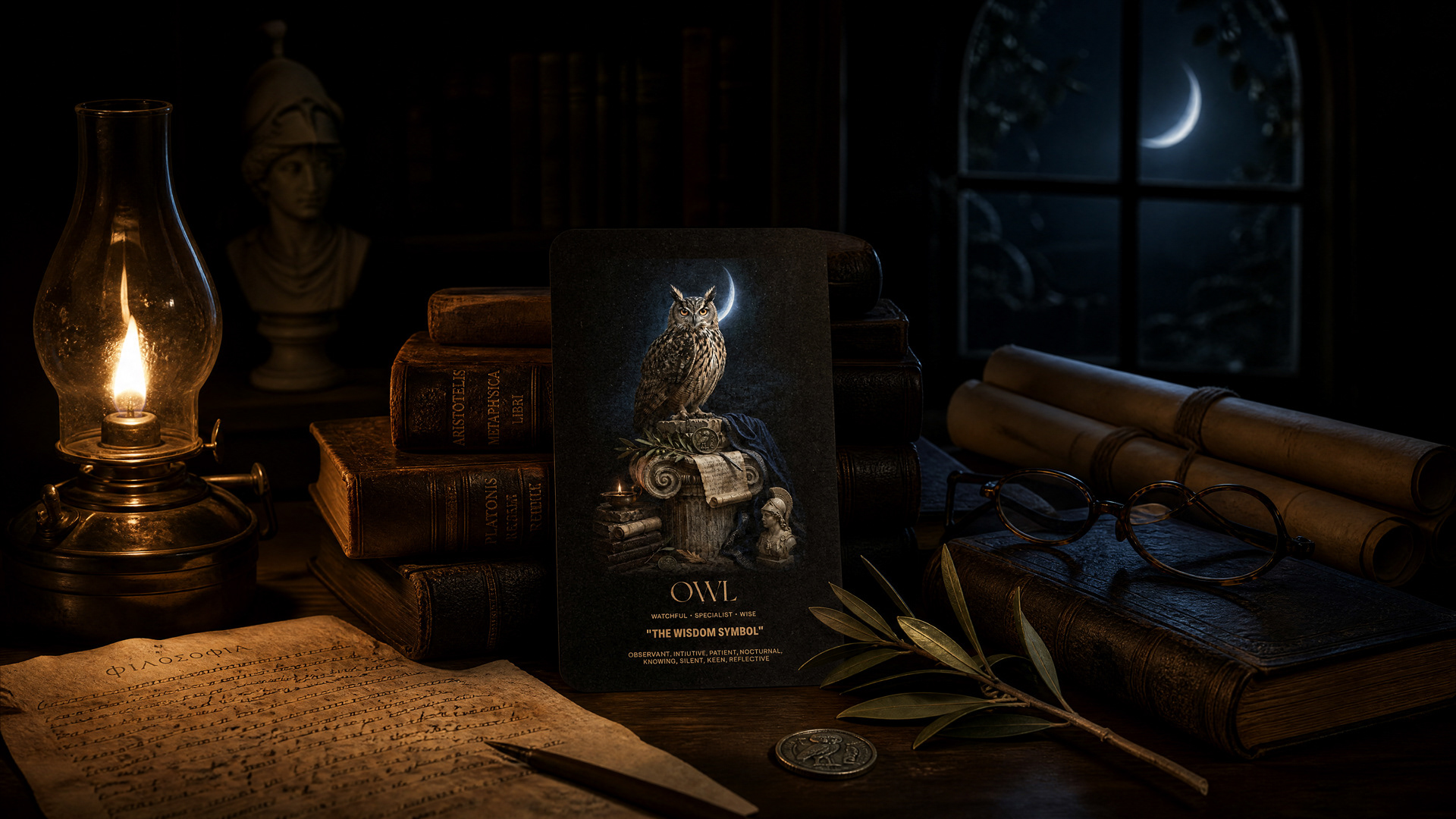
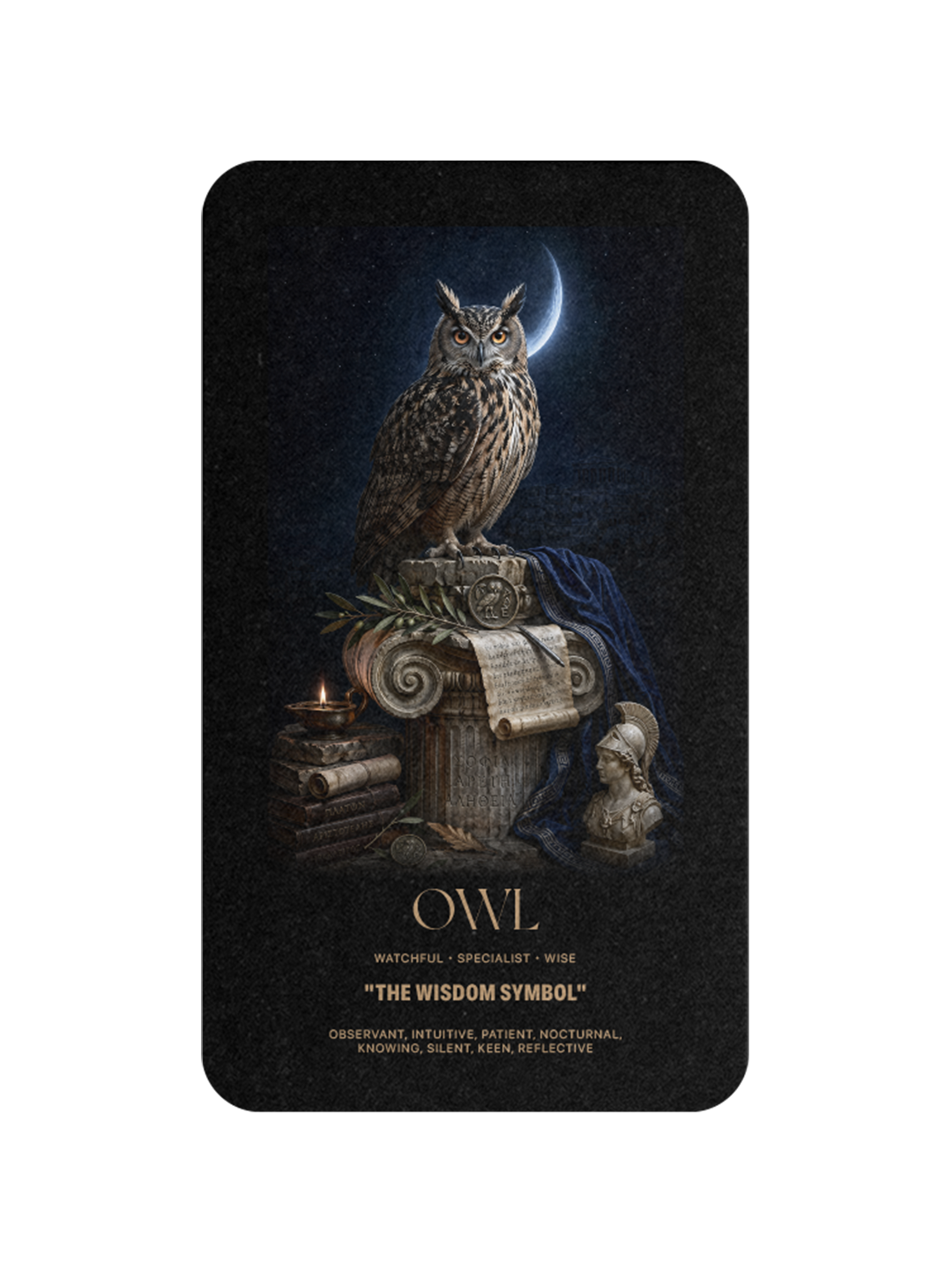
The Wisdom Symbol
The owl has been the animal of wisdom since Athena adopted it in ancient Greece. Athenian coinage carried the owl on its reverse from the fifth century BCE, and the silver coin was called simply "an owl" in common speech. TripAdvisor adopted the owl in 2000 as the mark of a brand that watches every corner of the world. Duolingo made the owl the mascot of language learning in 2011 and turned it into one of the most recognisable characters in software. The owl does not shout its knowledge. It waits until the room is quiet.
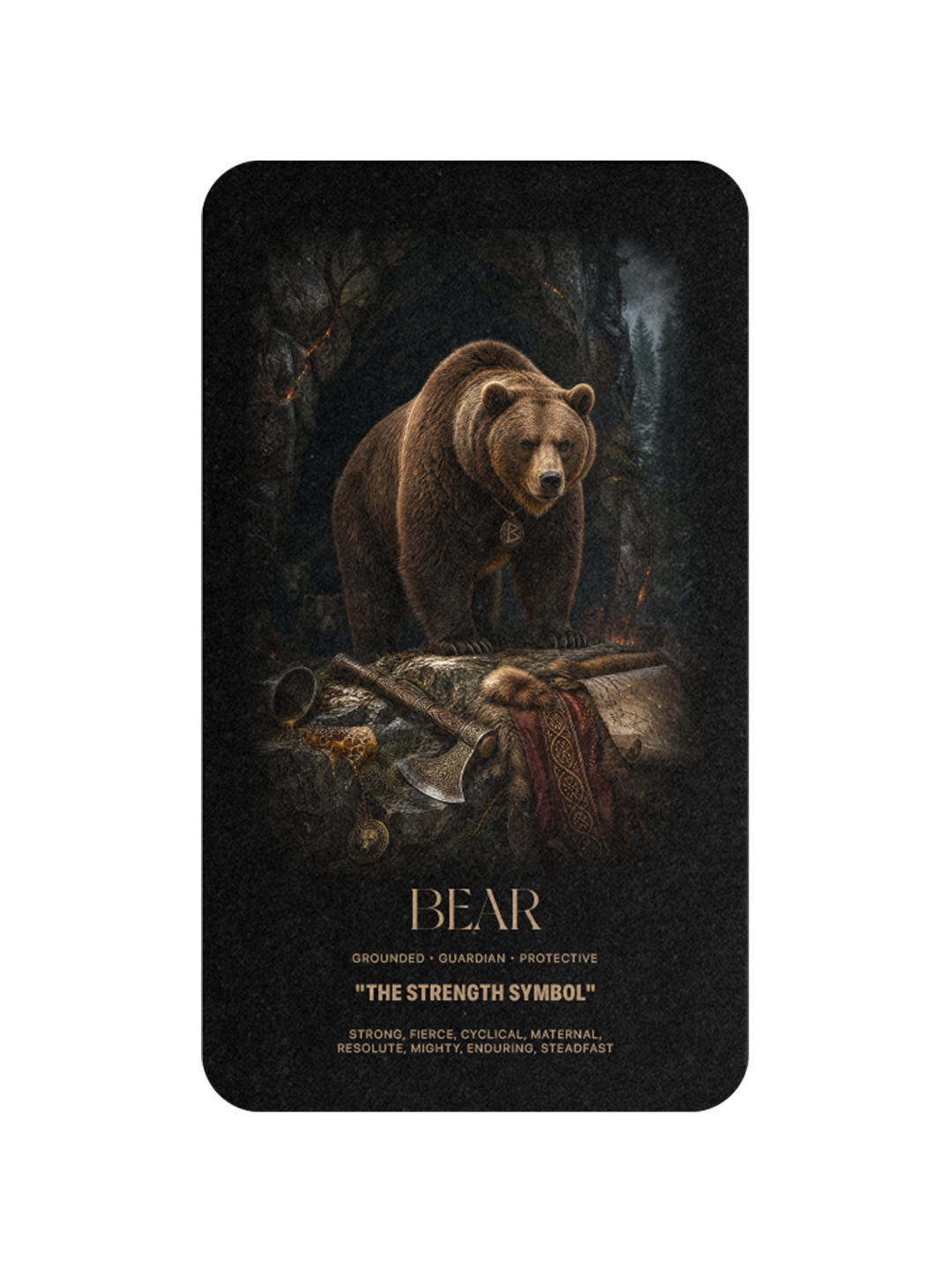
BEAR
The Strength Symbol
The bear is the animal of foundation. It has been the emblem of Bern, Switzerland, since Emperor Frederick II granted the city its coat of arms in 1224. The California state flag has carried the grizzly since 1911. The Chicago Bears, founded in 1919, made the animal the symbol of hard Midwestern strength. Russian political identity has been rendered as a bear in cartoons since the eighteenth century. The bear does not chase. It stands its ground.
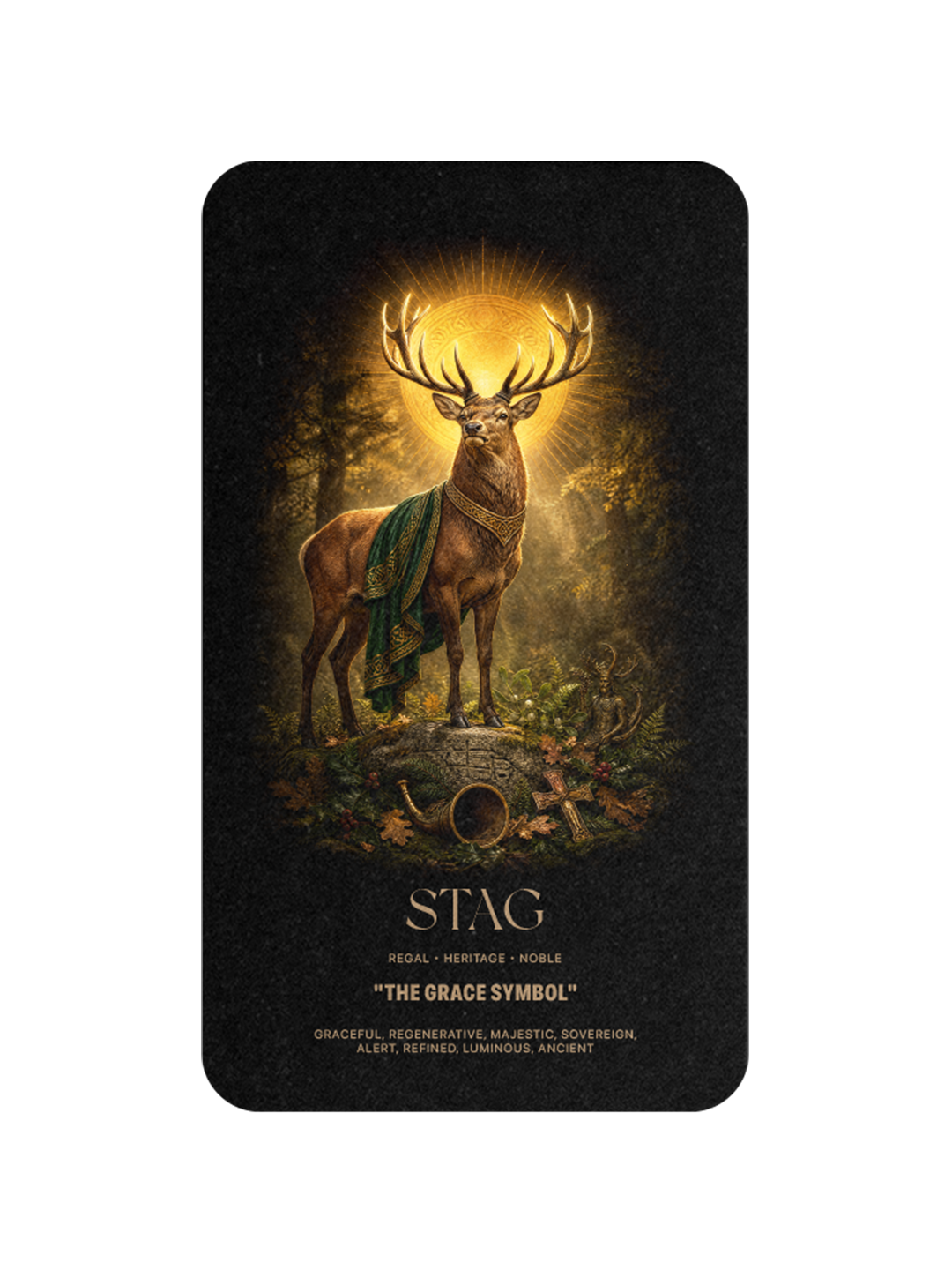
STAG
The Grace Symbol
The stag is the animal of nobility in the wild. It has been the symbol of Celtic druids, Nordic kings, and Christian hermits. John Deere adopted the leaping stag as its mark in 1876 and has redrawn it eight times without ever losing it. Jägermeister took the stag with a glowing cross between its antlers in 1934, borrowing the vision of Saint Hubertus. Every heritage brand from the Highlands to the Alps has, at some point, marked itself with a stag. The stag does not race. It carries the forest with it.
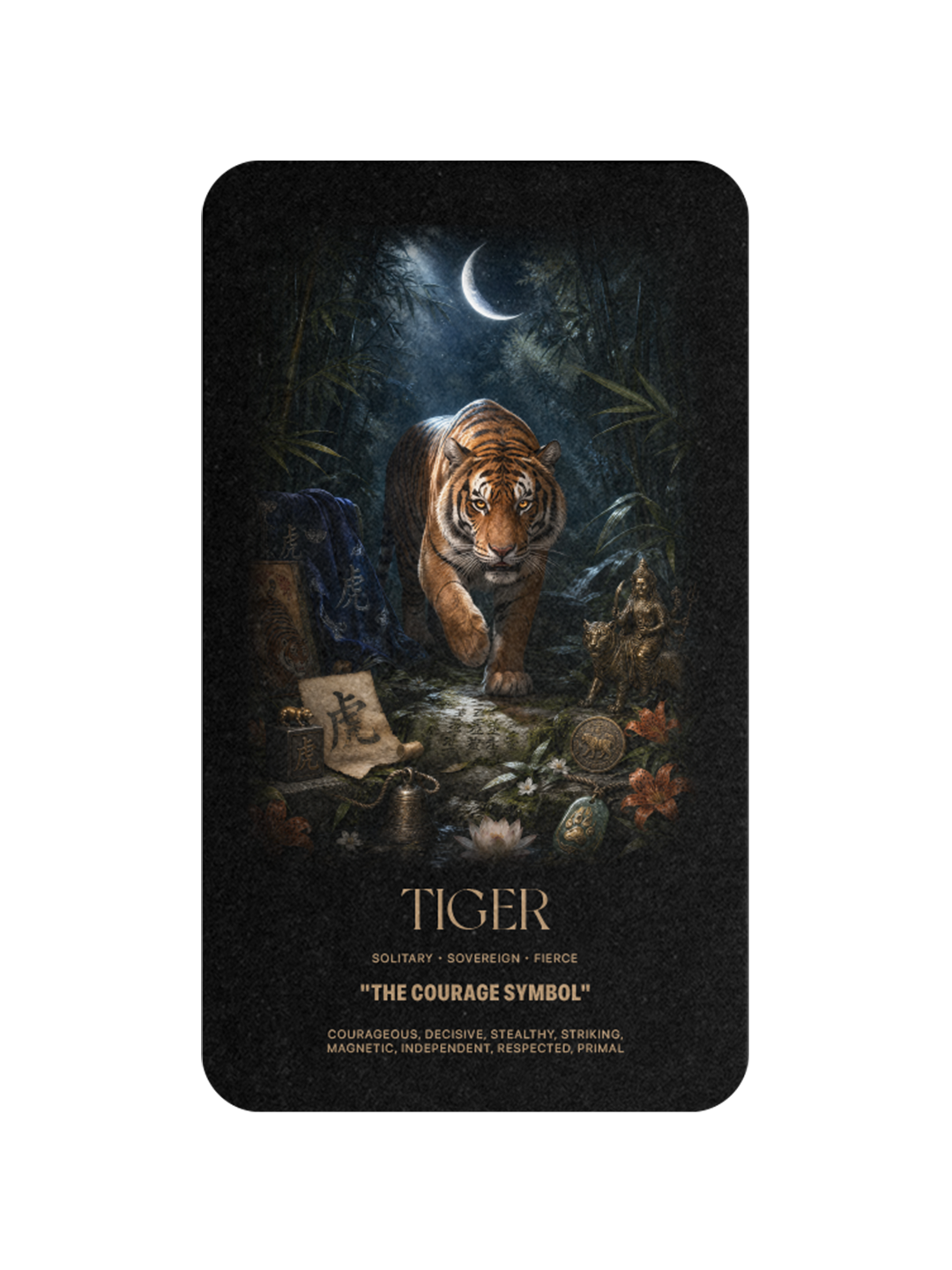
TIGER
The Courage Symbol
The tiger is the animal of solitary power. It walks the forests of Asia alone and has been the emblem of Chinese emperors, Vietnamese generals, and Bengali warriors. Tiger Balm, formulated by Aw Chu Kin in Rangoon around 1908, made the animal the mark of restorative strength across Asia. Kellogg's Tony the Tiger, drawn in 1952 by Eugene Kolkey, turned the animal into an American breakfast institution. Esso's "Put a Tiger in Your Tank" campaign, launched in 1959, made the tiger the icon of horsepower for a generation. The tiger does not need a pack. It is a pack of one.
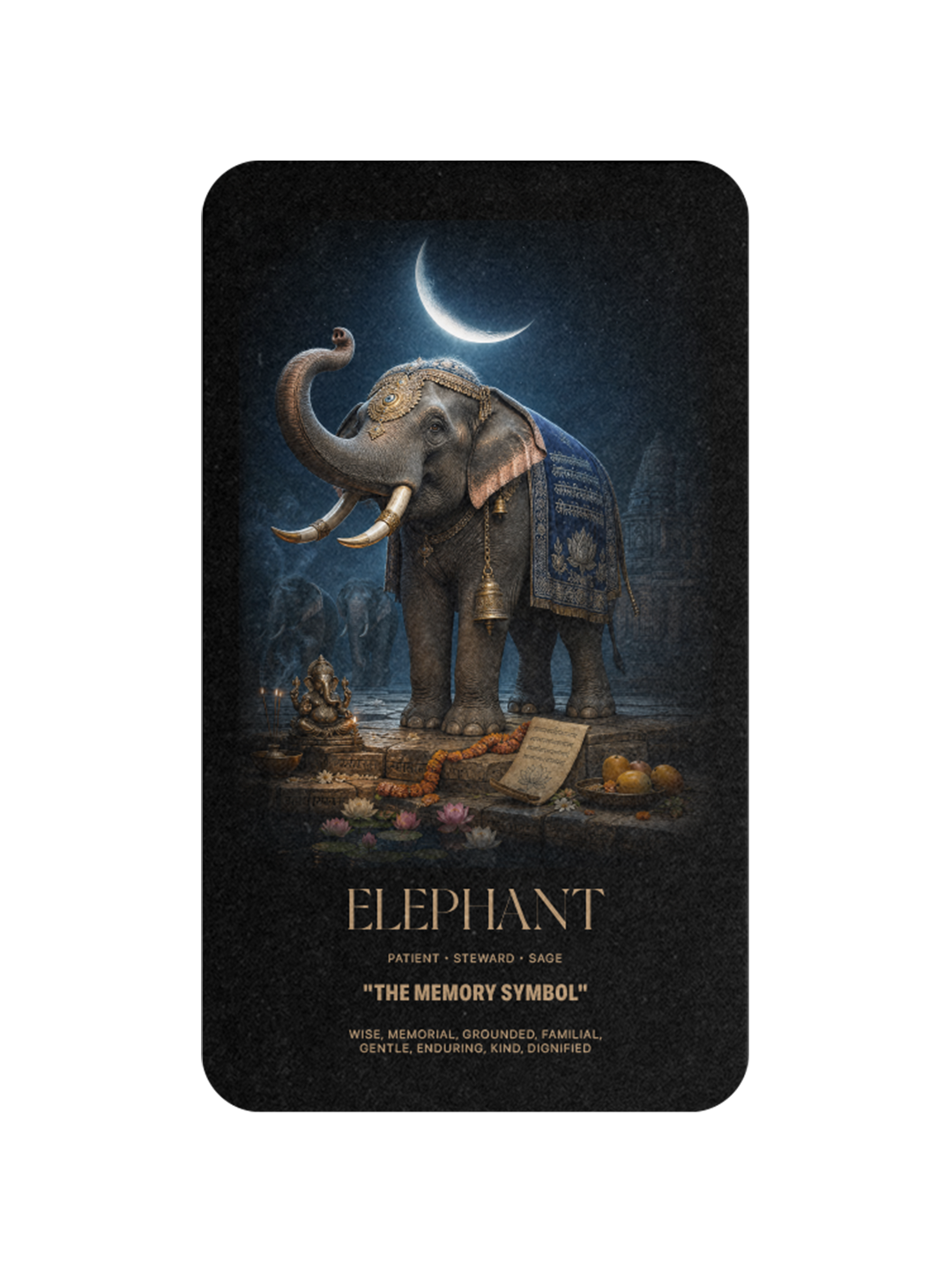
ELEPHANT
The Memory Symbol
The elephant is the animal of long memory. In Hinduism, Ganesha is the remover of obstacles, the god of beginnings, and the keeper of learning. Every ceremonial procession in India, from Mysore to Jaipur, has been led by an elephant for a thousand years. The Republican Party of the United States has carried the elephant since Thomas Nast drew one in a Harper's Weekly cartoon in November 1874 titled "The Third-Term Panic." The elephant does not forget. It curates.
The Strategic Lesson
The brands that endure share one discipline. They chose an animal early, and they never let it go. Peugeot's lion, Ferrari's horse, Merrill Lynch's bull, John Deere's stag, Alfa Romeo's snake, Anheuser-Busch's eagle, Duolingo's owl, Jägermeister's stag, Bumble Bee's fish. Twelve animals, claimed by thousands of brands, owned by only a handful in each.
The lesson for any brand being built today is simple. The animal is not the mascot. It is the strategy. Choose the animal that describes how the brand behaves, and the rest of the identity follows.
Every brand behaves like an animal. The greatest brands know which one.
CODEX™ Vol. V — THE ANIMALS
Twelve cards. Twelve cultures. One archive.
Directed and designed by Eduardo Andrade.
A CODEX™ project by INDUSTRIA® Branding Co.
A CODEX™ project by INDUSTRIA® Branding Co.