To name a brand, write a brief, explore several creative territories, generate hundreds of candidates, then cut them down with four tests: can people say it, spell it, can you own it, and does it survive translation? Choose a name that suggests rather than describes. It's easier to protect and harder to outgrow.
Your logo can be redrawn. Your colors can be refreshed. Your website will be rebuilt every few years. Your name is the one brand asset you'll probably keep for decades, and it's the one most founders pick in a weekend.
Naming is also the hardest brief in branding. A good name has to be short, distinct, pronounceable in several languages, legally available, free as a domain and a handle, and still mean something. Most of the good short words were registered years ago.
Since 2010, INDUSTRIA has named restaurants, breweries, cannabis brands, leather suppliers, marketing agencies and a dining room 605 feet above Manhattan. This guide is the playbook we use, with eight real names as worked examples. At the end, there's a free stress test to run your own candidates through.
01The 6 types of brand names
Almost every brand name fits one of six types. Knowing them gives you more places to look, and helps you spot when a whole long list is stuck in one type.
Most strong names sit in types two to five. They carry a hint of meaning, so the market gets it faster, without being so literal that a competitor can use the same words.
02Describe or suggest? The trademark spectrum
This is the decision that matters most, and it's a legal one as much as a creative one. US courts sort marks along a spectrum of distinctiveness, set out in the 1976 Abercrombie & Fitch v. Hunting World case. The further right a name sits, the easier it is to protect.
| Category | What it is | Protection |
|---|---|---|
| Generic | The common name of the product ("Bakery" for a bakery) | None |
| Descriptive | Describes a quality or feature ("Fresh Bread Co.") | Weak, only with proof of long use |
| Suggestive | Hints at the product; takes a small leap of imagination | Strong |
| Arbitrary | A real word with no link to the product (Apple for computers) | Very strong |
| Fanciful | An invented word (Kodak) | Strongest |
This is a general overview, not legal advice. Trademark rules differ by country. Always confirm a final name with a trademark attorney in your key markets.
The trap: founders love descriptive names because they feel safe. Everyone understands them on day one. But "safe" names are the ones you can't stop a competitor from using, and the ones you'll outgrow when you add a product line or a second city.
03The 5-step naming process
- Write the naming brief. What must the name do? Define the position, the audience, every market and language it has to work in, the competitors' names, and the hard rules (length, must-avoid words, whether the domain matters).
- Map naming territories. Choose four to six creative directions and explore each one on its own: the process (how it's made), the feeling (what it gives people), a place, a person, a number, a myth. For Wokuma!, one territory was the cooking method, another was taste. The name lives where they meet.
- Build a long list. Generate hundreds of candidates across every territory and every name type. Don't judge yet. Bad names next to each other often spark the good one.
- Screen to a short list. Cut hard with the four tests. Run quick trademark, domain and social-handle checks on everything that survives. Expect to lose most of your favorites here. That's normal.
- Test in context and decide. Never pick a name from a list in a spreadsheet. Show the finalists on a sign, a package, an app icon, a business card. Names that look fine as text often fall apart, or come alive, once they're set in type.
048 real brand names, decoded
Each of these names was created by INDUSTRIA as part of a full identity. Here's the formula behind each one and why it works.
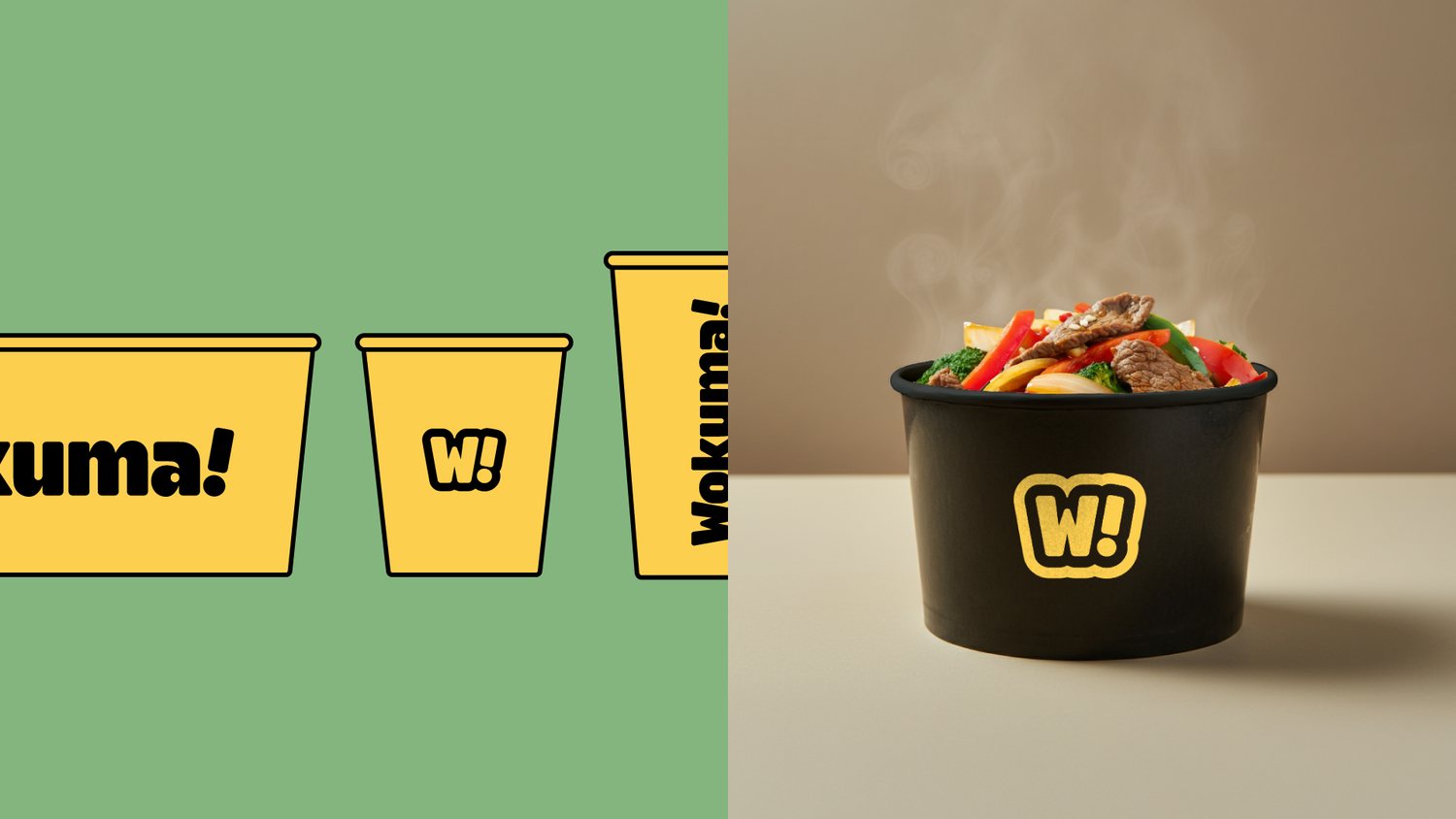
Wokuma! — the fusion that tastes like the food
- Formula
- Wok, the high-heat cooking method at the center of the cuisine, plus umami, the fifth taste. Ending on a rhythmic punch gives it motion and attitude; the exclamation mark makes it a shout.
- Why it works
- It explains the food without describing it, and it's built to travel. The brief called for a name that could scale beyond Zurich.
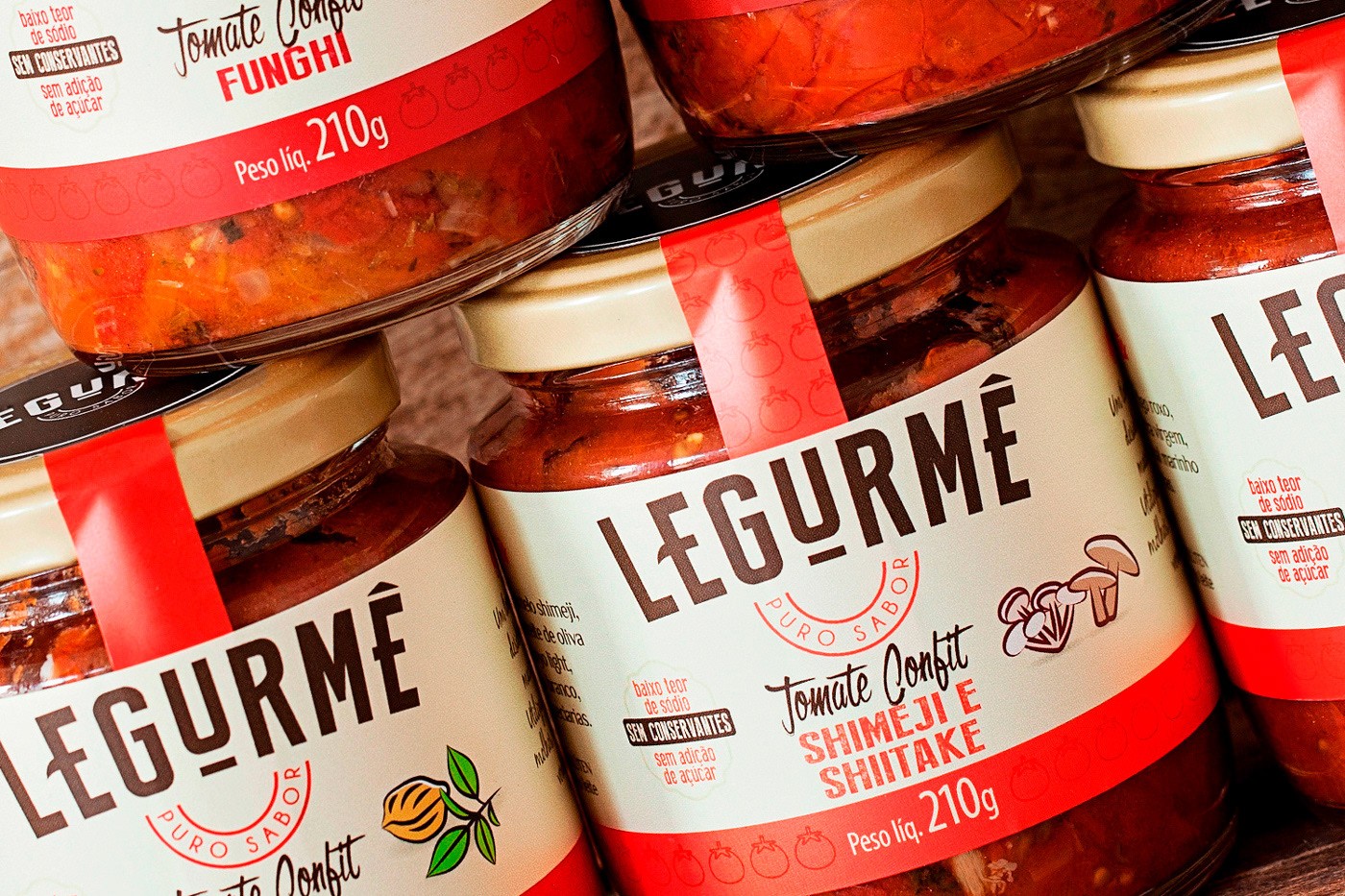
Legurmê — two words, one promise
- Formula
- Legumes, Portuguese for vegetables, plus gourmet. A natural-food brand positioned as premium in a crowded category.
- Why it works
- The name holds the whole strategy: everyday ingredients, elevated. The circumflex on the final ê makes it unmistakably Brazilian. The Dieline featured the packaging that grew from it.
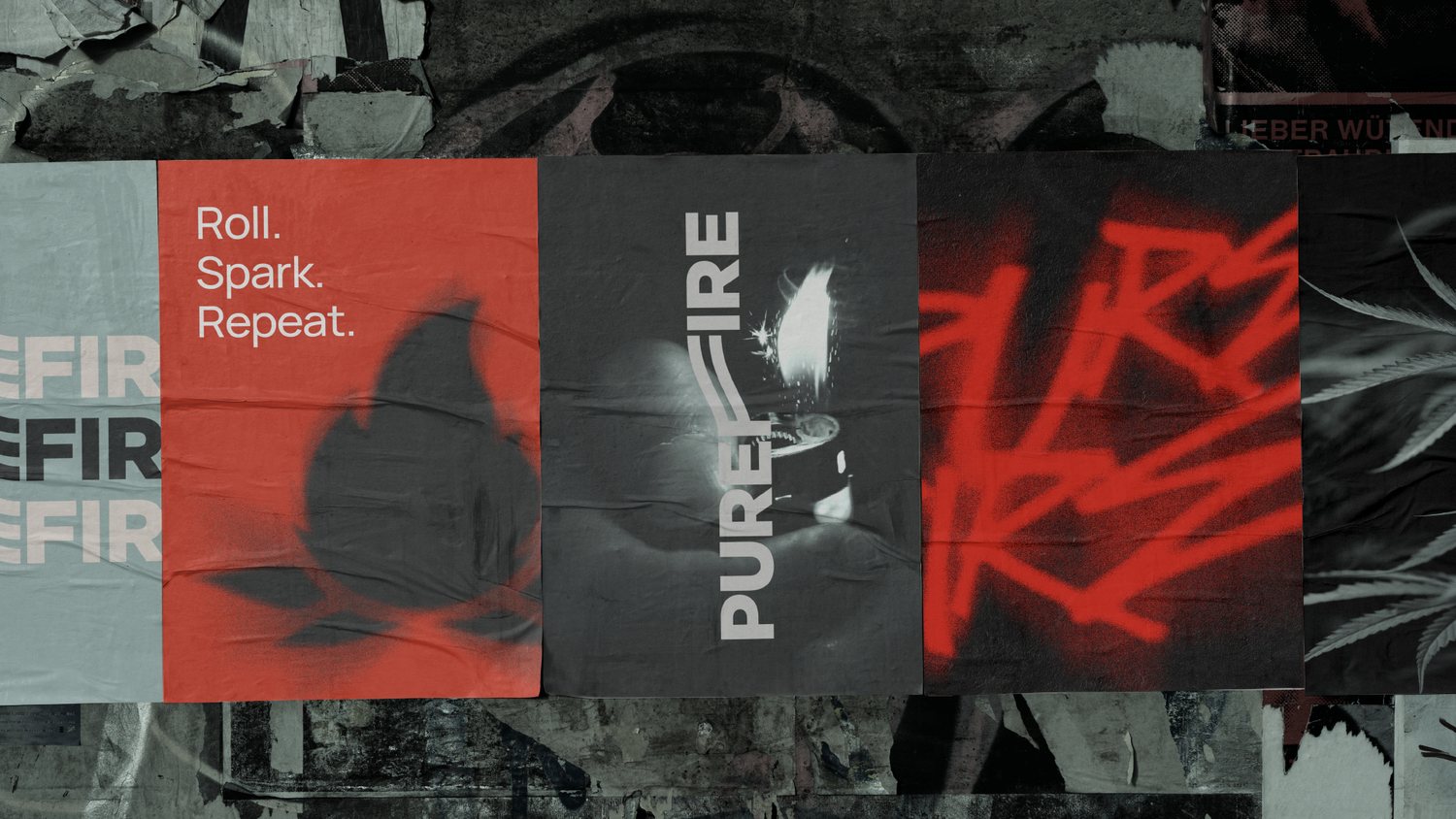
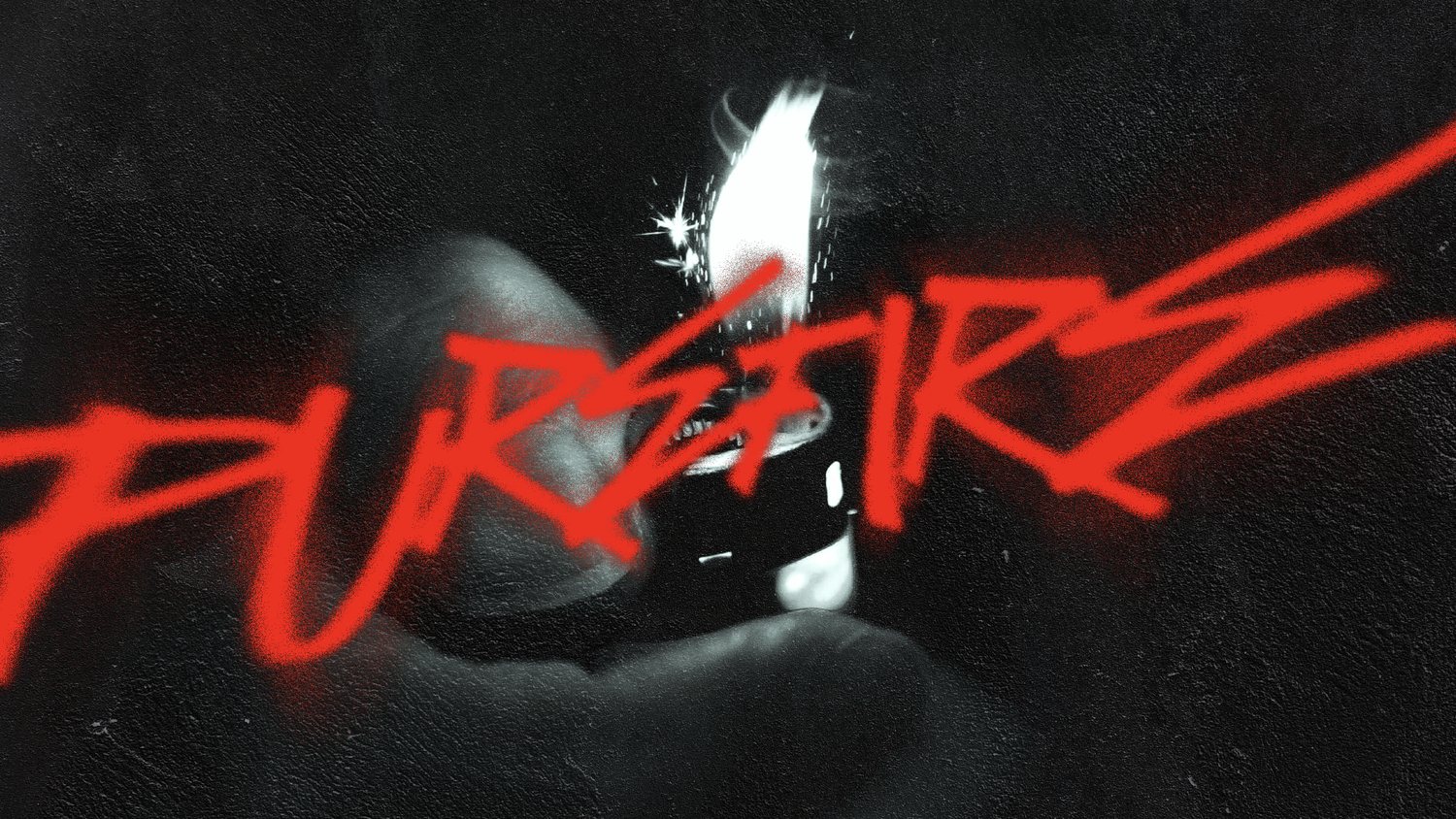
PUREFIRE — a metaphor instead of a cliché
- Formula
- Two plain English words, joined. In a cannabis category full of leaves, calm and medicinal minimalism, the name positions the brand as one of ignition: bold, urban, expressive.
- Why it works
- An evocative name lets you step out of your category's vocabulary. If every competitor's name sounds the same, take your name from a different emotional territory.
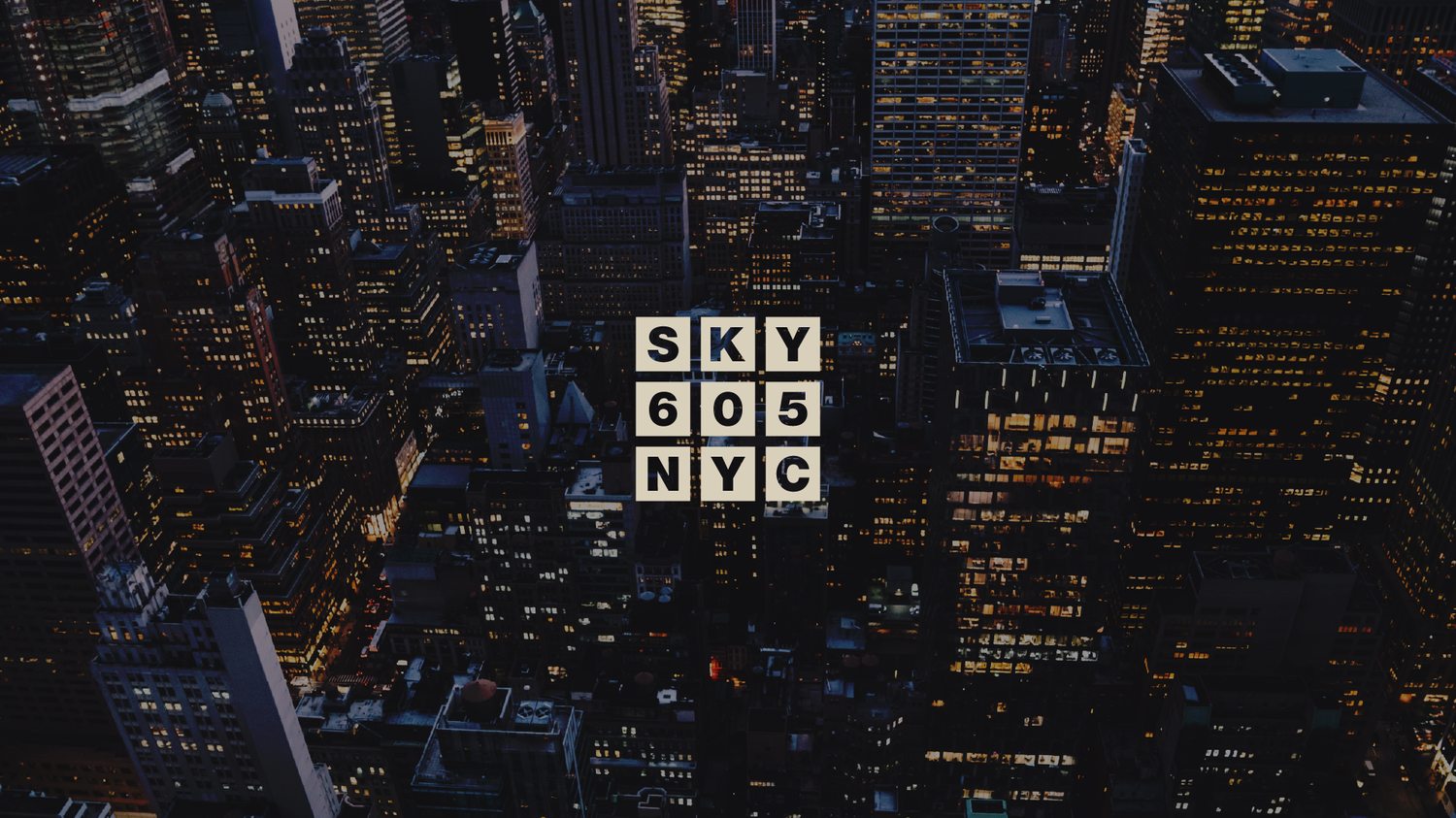
SKY605NYC — a fact you can't copy

- Formula
- The dining room sits 605 feet above Manhattan. The name states the fact, and carries a quiet promise: the view is just the beginning.
- Why it works
- A name built on a true, specific fact is automatically distinct. No competitor can be 605 feet up in the same building.
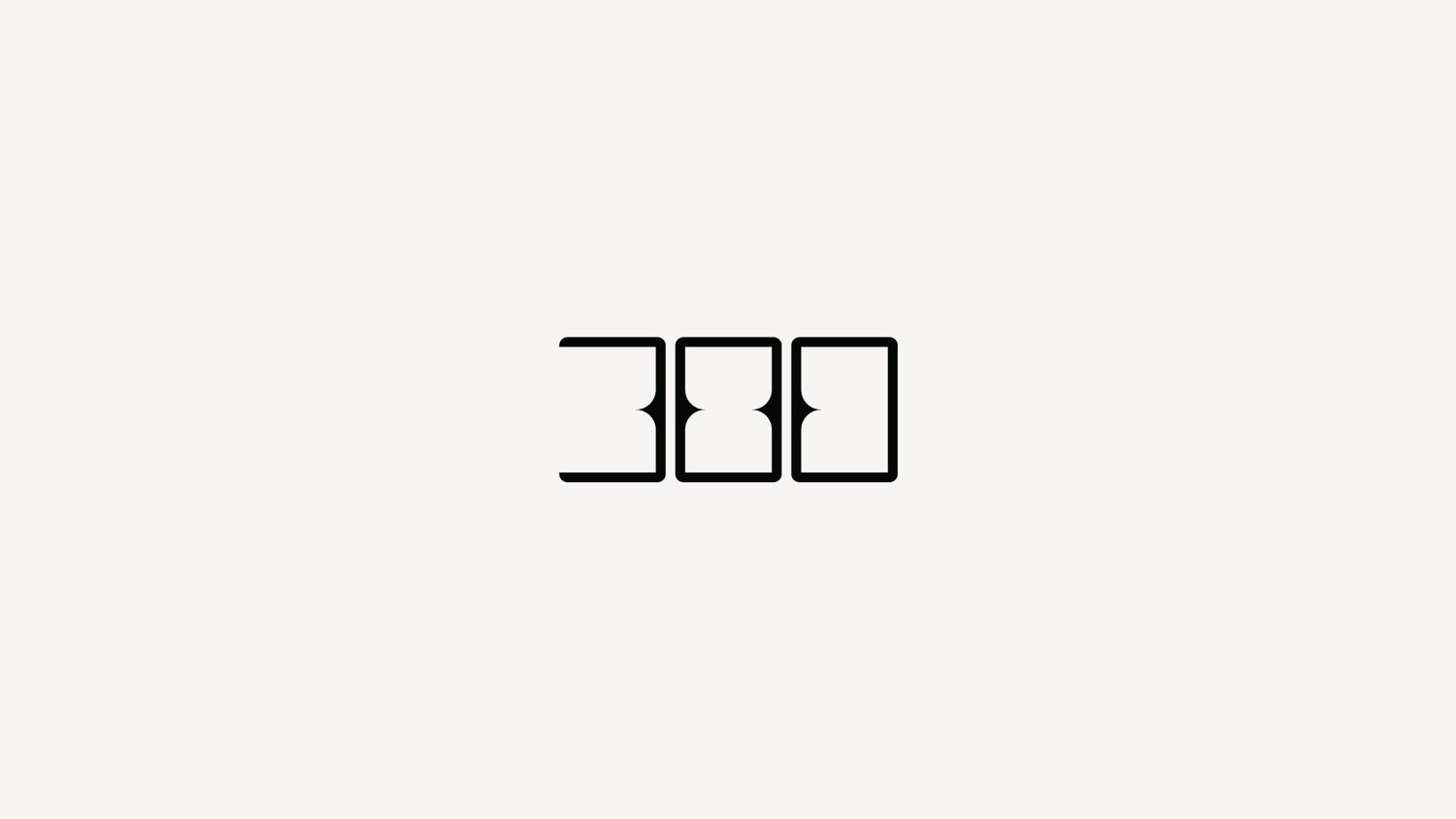
300 Cosmo Dining Room — a number as a monogram
- Formula
- A three-digit number anchors a Nikkei fine-dining group across Brazil and Uruguay, drawn as a custom numeral logo.
- Why it works
- Numbers read the same in Portuguese, Spanish and English, which matters for a group operating across borders. They also become logos almost by themselves.
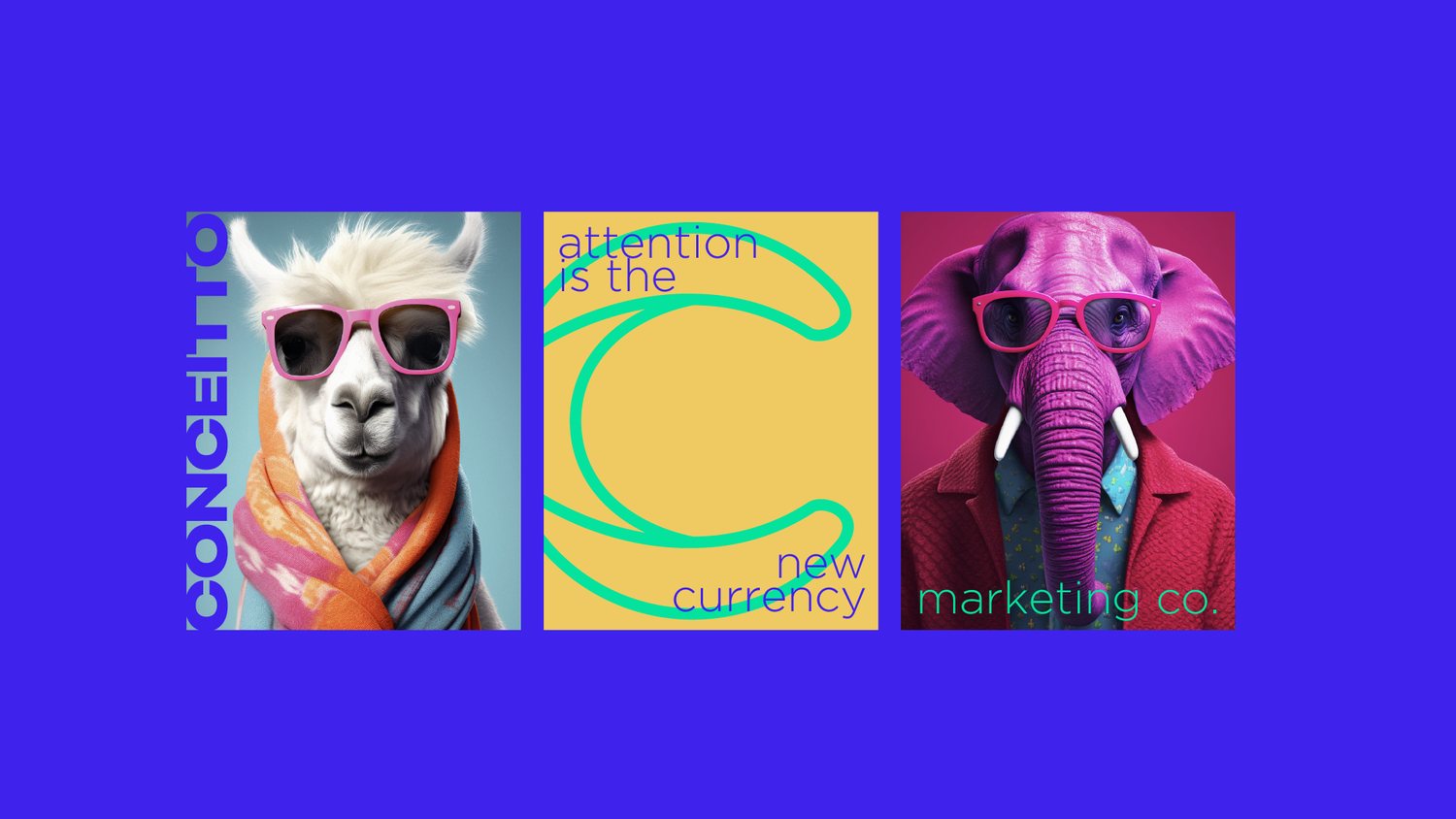
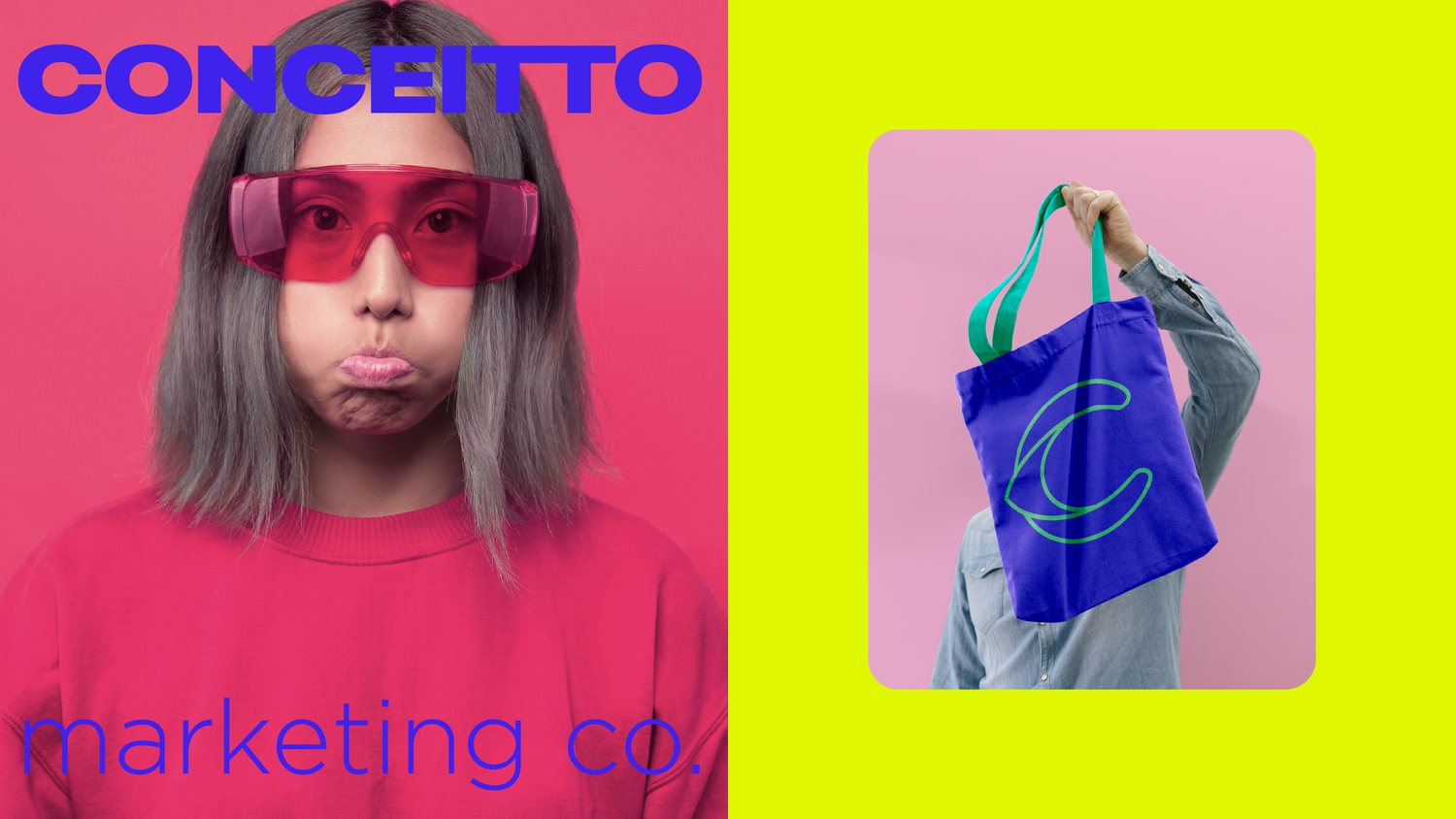
Conceitto — a familiar word, made ownable
- Formula
- A play on conceito, Portuguese for "concept," with a doubled T that makes it distinct and gives the wordmark more rhythm.
- Why it works
- Altered spellings turn a word nobody can own into one you can. The risk is spelling: if people hear it, can they type it? Test this before you commit.
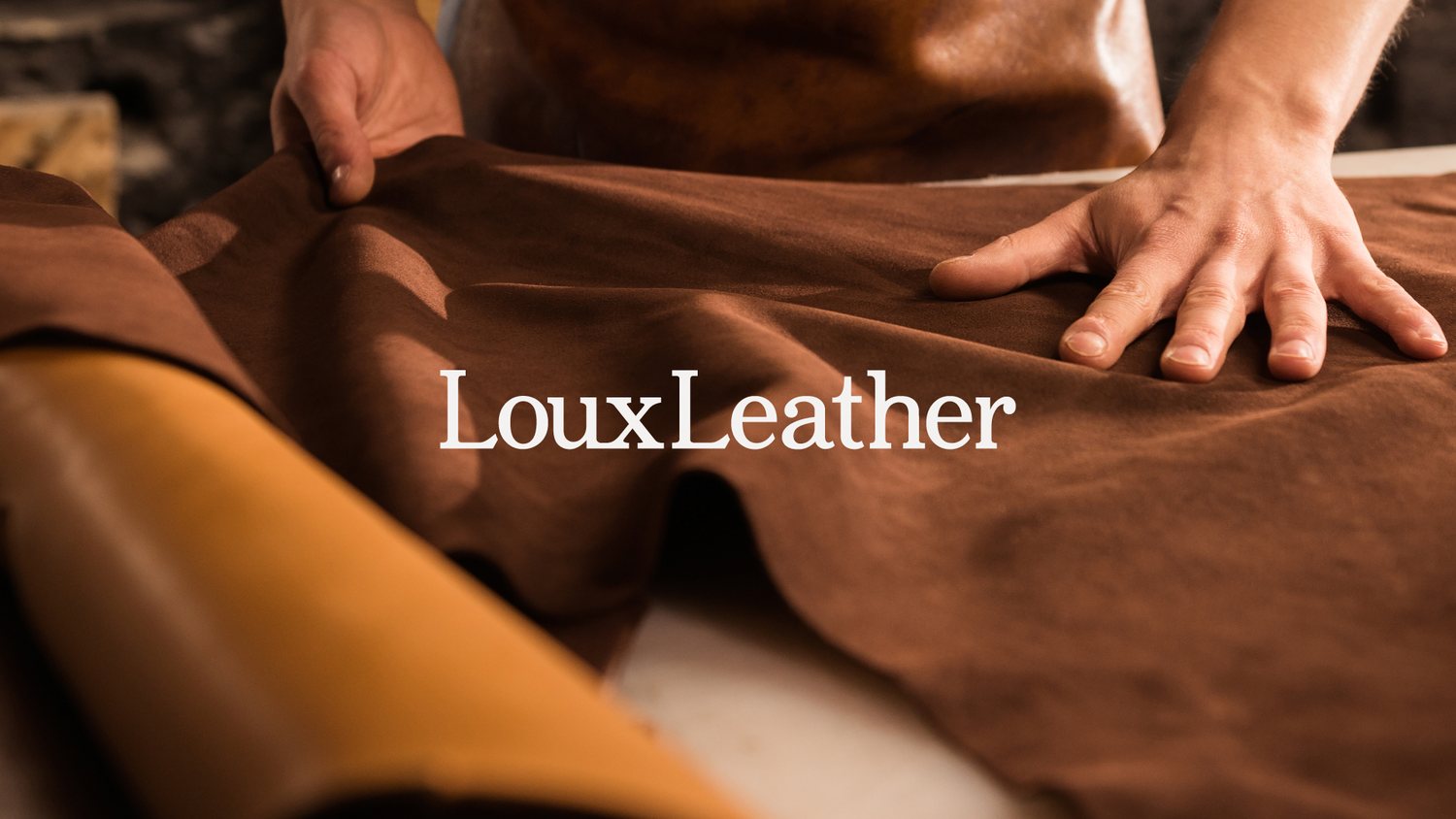
LouxLeather — alliteration that becomes a symbol
- Formula
- A new leather brand within Peles Pampa's line, supplying the automotive and furniture industries. The double L gives the name rhythm and became the brand's interlaced "LL" icon, shaped like a leather hide.
- Why it works
- Choose names whose letters can become a mark. Repeated initials make a monogram almost inevitable.
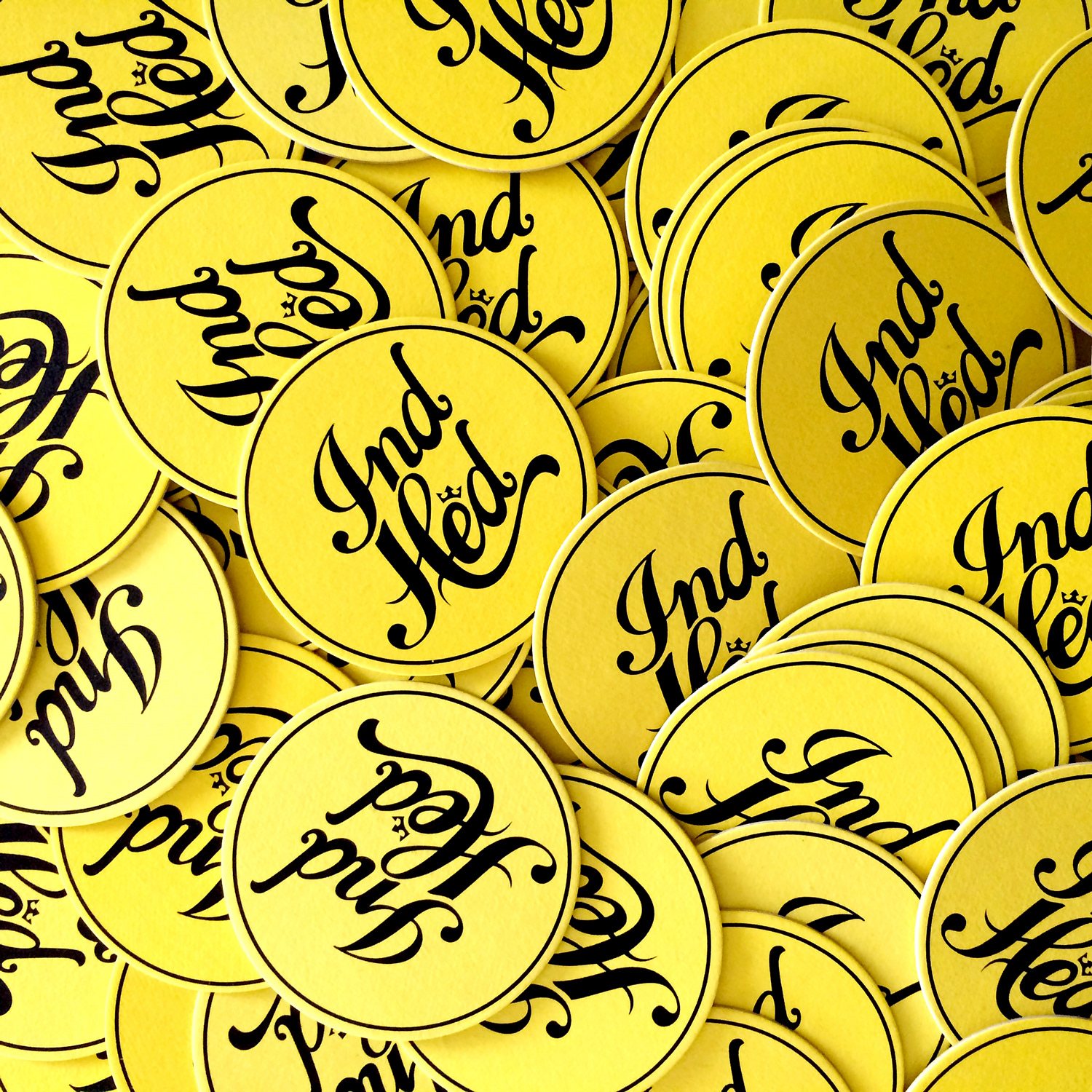
IndHed — a name for a passion project
- Formula
- A Brazilian craft brewery born in 2012 inside INDUSTRIA's own studio. A short, punchy coined name, topped in the identity with a small crown.
- Why it works
- A coined name gives you a blank canvas. IndHed's meaning comes from everything around it: the script, the crown, the color-wrapped bottles. It went on to features in The Dieline, Abduzeedo and Computer Arts.
05The 4 tests every name must pass
- Say it. The bar test: shout it across a noisy room. Does the other person hear it right the first time? Is there only one obvious way to pronounce it?
- Spell it. The phone test: say it once to someone who has never seen it, and ask them to type it. If they hesitate, people will hesitate when searching for you.
- Own it. Is it available as a trademark in your category and markets? Is there a usable domain and the social handles you need? Is anyone in your industry using something too close?
- Translate it. What does it mean, or sound like, in the languages of every market you plan to enter? Ask native speakers, not just a translation app.
A note on the most famous "translation disaster": the story that the Chevy Nova flopped in Latin America because "no va" means "doesn't go" in Spanish is a myth. The car sold well. Real translation problems are usually subtler, such as slang, unfortunate sounds or unintended associations, which is exactly why you need native speakers.
06The free name stress test
Type a name you're considering. The test flags common risks and gives you quick links to start your availability checks. It runs in your browser; nothing is sent anywhere.
Type a name above to run the test.
Check AvailabilityThis test checks sound and spelling risks only. It is not a trademark search or legal advice.
Get Help Naming Your Brand →078 brand naming mistakes
- Falling in love before checking. Run trademark and domain checks before you get attached, not after you've printed business cards.
- Naming what you sell today. "Lisbon Burgers" is a problem the day you open in Porto or add tacos.
- Copying the category leader. If the biggest player is "Something-ify," a second "-ify" makes you look like a follower.
- Voting by committee. Group votes favor the least objectionable name, which is usually the least memorable. Decide against the brief, not against opinions.
- Judging names as plain text. Always see the finalists set in type, on real applications.
- Ignoring sound. A name is heard more often than it's read: in conversations, podcasts and voice search.
- Over-relying on name generators and AI. They're useful for warming up a long list, but they draw from the same patterns as everyone else's, and they can't check meaning, fit or availability.
- Skipping the attorney. Free database searches are a first filter. A professional clearance search is cheap compared with a rebrand forced by a cease-and-desist letter.
08What about the .com?
An exact-match .com for a short name is rare and often expensive. Don't let it veto an otherwise great name. Common, credible routes:
- Add a modifier: get-, try-, -hq, -studio, or your category (our own home is byindustria.com).
- Use a relevant domain ending such as a country code for a local business, or .co, .studio or .design where it fits.
- Buy the exact .com later, once the brand has traction and the purchase is worth it.
What you can't work around is a trademark conflict. Prioritize legal availability over the perfect domain every time.
09Frequently asked questions
What are the types of brand names?
Six common types: descriptive (says what you do), compound or fusion (two words merged), evocative (a real word used as a metaphor), altered spelling (a familiar word respelled), numeric or factual (built from a number or fact), and invented (a new word with no prior meaning).
How long does it take to name a brand?
A professional naming project usually takes 3 to 6 weeks from brief to a legally screened short list. Full trademark clearance by an attorney can add time, depending on the countries involved.
How do I check if a brand name is available?
Start with free searches: USPTO in the US, EUIPO's TMview in Europe, WIPO's Global Brand Database, INPI in Brazil, plus a domain registrar and social platforms. Then get a full clearance search from a trademark attorney before you invest in the identity.
Should my brand name describe what I do?
Usually not. Descriptive names are clear but weak legally and easy to outgrow. Suggestive, arbitrary and invented names are stronger and give the brand room to grow.
Can I use AI to name my brand?
AI is a useful brainstorming partner for a long list. It can't judge strategic fit, test how a name feels to your audience, or confirm legal availability, and its suggestions tend to resemble everyone else's. Use it to widen the funnel, not to make the decision.
Naming a restaurant? Our Restaurant Branding Guide includes five naming formulas built specifically for food and hospitality.
Launching a product? See how names come to life on shelf in our Packaging Design Guide.